Sunday, October 1, 2017

Skepticism of Bannon declaring an "economic war" with China

Fresh off steering strategy for a presidential campaign and White House which has damaged institutions and democratic norms in the United States, Steve Bannon flew to Hong Kong in the second week of September to deliver a speech to investors at an event hosted by a Citic subsidiary. He was greeted by protesters outside the venue decrying the toxic politics Bannon is famous for nurturing. 

In line with his nationalist rhetoric, Bannon declared an "economic war" between China and the U.S. during his speech. At ChinaFile, a number of experts discussed the merits of this sort of label for the relationship between the two countries. My small contribution to the conversation is copied below. The entire discussion can be read here.
I question the motives of the messenger. The discussion above, to the credit of its participants, has revolved so far around the merits of using “economic war” as a concept in the discourse of U.S.-China relations and the extents to which China is competing on a fair playing field. But we should be wary of Bannon, a regressive political figure and “alt-right” enabler who craves conflict within the U.S. and apparently war with China, of dishing up a conversation on the policy nuances toward China. Somewhat like the race-based theories of social organization to which his Breitbart faithful adhere, Bannon seems to selectively use bits and pieces of acknowledged fact to advertise a normative argument for deeper conflict, in this case with China.
Many people within the policy and political science community have engaged for years in discussion of the U.S. trade stance toward China and its bucking of international norms and standards. This conversation should continue, inclusive of those across the policy spectrum. But we ought to remain circumspect toward those who may not be engaging in good faith, who do not intend to maintain a just and peaceful world or resort to conflict as a last resort, those who undermine democracy with ethnocentric populism and envision a world divided along such lines. Bannon’s Hong Kong speech is an effort to stay relevant after leaving the chaos he helped mold in the White House.

Saturday, April 1, 2017

Interview with VOA about arrest of Lee Ming-che 美國之音採訪:李明哲被抓事件

Below is a March 31 article from Voice of America (Chinese) on Taiwanese human rights activist Lee Ming-che, who was arrested while visiting China in March and who remains in pre-trial detention. VOA interviewed me for the story, quoting my analysis of the reasons behind his arrest.

______________________________________________


台灣李明哲案 將引發更多境外非政府組織警惕


沉默一段時間後中國政府終於在星期三確認,台灣非政府組織、民主活動人士李明哲“因涉嫌從事危害國家安全活動”被拘留,人權組織和觀察人士擔憂中國正在擴大對NGO活動人士的攻擊,希望當局對李明哲受到的指控提供進一步細節,否則就應立即將他釋放。


目前在台北文山社區大學工作的李明哲自3月19日從澳門入境中國大陸後就失去音訊,他的家屬、同事和台灣政府多次向中國政府詢問都未獲回音,星期三,中國國台辦發言人馬曉光在例行記者會上證實,李明哲因涉嫌從事危害國家安全活動正接受相關部門調查。


國際特赦組織東亞部主任林偉星期三在一個聲明中指出,中國當局對李明哲有關“涉嫌從事危害國家安全活動”的指控過於空泛,這可能引發對中國是否正在擴大對合法NGO活動人士攻擊的擔憂,如果李明哲遭拘留“只是單純與他合法的活動主義有關”,那麼當局應該立即、無條件將他釋放。


林偉說,李明哲因定義不明的“國家安全”理由被拘留,將使那些與中國境內NGO合作的人產生警惕,因為“當局現在針對NGO及它們合作夥伴所具有的不受監督權力,已經大到令人害怕的程度。”


美國時政評論人士史凱文在接受美國之音採訪時說,從李明哲和最近幾個與中國“危害國家安全”有關的案例,例如瑞典人權工作者彼得達林、澳大利亞學者馮崇義等境外人士被抓捕或限制離境的情況來看,中國正在擴大國家安全的範圍和定義,儘管一般境外普通民間人士到中國祇是開會而非搞活動或抗議,都有可能被認為是觸及國家安全的範圍。


史凱文猜測,李明哲被抓可能有3個原因,第一個就是李明哲的背景。他說,客觀而言,李明哲並非一般台灣公民,而是一個“關心中國民主”的台灣人,他是一個NGO工作者,而且還是前民進黨黨工,因此對中國而言,李明哲是一個“有政治色彩背景”的台灣人。其次可能與中國年初開始實施的《境外非政府組織境內活動管理辦法》有關。


史凱文說:“這個法也是中國公安部管理的,公安部是國家安全的管轄權,有可能他是因為這個原因被抓的;第3,最近新聞報導說李明哲跟中國大陸很多NGO有交流,我們不知道他到底和哪些NGO和人士交流,有可能是比較敏感和所謂的敏感人士,有可能是跟他們的案子有關。”


對於台海兩岸目前官方交流中斷的情況下,台灣應該如何在李明哲案施力或協助家屬,史凱文認為,單方面施壓較為困難,台灣政府應該透過國際社會發聲,讓北京知道人權是普世價值,任意抓捕公民是非法的。


史凱文說:“單方面施壓中國很難,但是這應該變成一個國際社會的問題。總體來說,國際社會重視民主,重視民間社會、公民社會。基於這些原則,還有人權的普世價值,整個國際社會應該強調,你這樣抓捕人是不對的,按照國際法是非法的,台灣政府可能只能基於這些倡導或行動去幫助李明哲。”


此為,史凱文也表示,中國國內有其法律程序,或許有人權律師願意協助如今自己都成為敏感人士的李明哲,不過他說,“這種法律程序都是假的”,最後是否能真正幫到李明哲他感到悲觀。


台灣“關懷中國人權聯盟”理事長楊憲宏告訴美國之音,李明哲在台灣經常參與關心中國民主運動的活動,他所做的事在全世界民主國家,包括台灣,都合乎情理法,但只有在中國會被抓。


楊憲宏說,如果中共認為這是境外反華勢力入侵,那麼兩岸關係“根本走不下去”,因為李明哲是堅持民主自由價值的2千3百萬台灣人其中一個,抓一個李明哲等於告訴全台灣人,中共是與台灣價值和全球價值為敵,因此他說,“習近平不下令放人,就是首惡。”


[來源:https://www.voacantonese.com/a/taiwan-activist-detention-china-20170331/3790691.html]

Wednesday, September 28, 2016

在美国之音电台谈总统候选人首场辩论 Discussing the first presidential debate on Voice of America

昨天我参加了美国之音电台中文频道的一个交谈节目,讨论了美国总统候选人川普和克林顿首场辩论,节目完整视频在下面。

Yesterday I was invited to participate in a discussion of the first presidential debate between candidates Hillary Clinton and Donald Trump on Voice of America's Chinese-language channel. The full video is below. It is in Chinese without subtitles.


Wednesday, July 20, 2016

Conversation: How Should the Republican Party Approach China Policy?

President Nixon and Premier Zhou Enlai toast in Beijing (February 25, 1972)

ChinaFile hosted a conversation during the Republican National Convention on Trump's China Policy. It was kicked off with comments from his advisor Peter Navarro, a business professor at University of California Irvine. Along with others, I took part in the conversation. My comment is copied below. The conversation can be found here. 


For starters, Republicans should stop seeking out the next war. Historically, Bush II was good at war-making—though maybe not war-winning. The fear and simplistic narrative of war, splitting the world into ‘us’ versus ‘them,’ can be an effective tool to mislead and corral the public. Such a tool is especially potent in a national campaign during a time when people are struggling economically and told to dread impending, random violence. Donald Trump now looks to formulate another war, a trade war with China. The narrative is custom-made to evoke fear and nationalism: A far-off country with an authoritarian government and a bone to pick is maliciously stealing your livelihood and weakening your country.

There is considerable imprecision, narrowness, and risk in Trump’s China narrative.

First, an examination of history will teach us that manufacturing began declining in the U.S. in the 1970s, long before China came on the scene as an industrial powerhouse. Huge structural shifts were caused by our North American allies via N.A.F.T.A., but we are not declaring “war” (i.e., needlessly demonizing) Canada and Mexico because of their economic impact on the U.S. (But based on Trump’s wall and immigration rhetoric, we cannot seriously doubt that he would not escalate conflict with America’s southern neighbor.)

Monday, November 23, 2015

Fortune story on China Labor Watch report

Fortune reported on the investigation of China Labor Watch into widespread and serious labor rights violations in Chinese toy factories supplying to top global toy brands. Forbes received responses from a number of the implicated toy brands. The beginning of the story is below. 


Hasbro, Mattel Toy Suppliers Slammed In Labor Report
November 22, 2015
by Claire Groden

China Labor Watch released results of undercover investigation.

Laborers at some toy factories in China work without adequate protection, toiling long hours with few, if any, breaks. Many facilities lack proper fire safety measures and subject workers to poor living conditions. For some, quitting means giving up earned wages. According to a new report by China Labor Watch, which investigated five major factories that supply toys to Hasbro and Mattel, labor violations are rampant in Chinese toy factories.

China Labor Watch sent undercover investigators to the factories, which altogether employ about 20,000 laborers. “Over the past 20 years, toy brands and retailers have reaped tremendous benefits from the labor and sometimes even the lives of Chinese workers,” China Labor Watch Program Coordinator Kevin Slaten said in a press release, “yet these companies fail to respect labor rights and to ensure that workers also enjoy the fruits of the toy industry’s success.”

The report found instances of hiring discrimination, mandatory and excessive overtime work, unpaid work, broken labor contracts, poor safety measures and few paths for laborers to seek recourse. Many of these issues also break Chinese labor law.

Read the rest of the Fortune story.


Tuesday, August 18, 2015

Lessons of the Tianjin Explosion

Aftermath of the Tianjin chemical explosion. Source: VOA

Below is my contribution to a conversation on ChinaFile about the destructive Tianjin chemical explosion. The entire conversation can be viewed here.

Five days before the terrifying and deadly Tianjin explosion was the first anniversary of the Kunshan Zhongrong Metal Products incident, where a massive metal dust explosion and fire killed at least 146 workers. In a report I wrote for this website about a month after the tragedy, I cited the latest casualty figure: 75. I also explained how the government apparently had deemed the incident a sensitive topic, censoring conversation and reporting. It was only in December, 2014, four months later, after the immediate shock had subsided, that the State Administration of Work and Safety revised the death toll in Kunshan to 146 people.

Tuesday, July 21, 2015

Is China's Reform Era Over and, If So, What's Next? (ChinaFile)

Fordham Law School professor Carl Minzer's article in the Journal of Democracy sparked a conversation on ChinaFile about the future of China's political landscape. Minzer's argument traces the political evolution of the Communist Party in the "Reform Era", when Deng Xiaoping took over the reigns of power in 1978, to the current day, a time when Xi Jinping's anti-graft campaign and re-entrenchment of nationalist rhetoric has set the Communist Party and China on a new path, which Minzer suggests constitutes a post-reform deliberalizing era. But where this path will ultimately lead currently remains a matter of oracle bones.

I had the chance to participate in the discussion at ChinaFile, which can be viewed here.

Sunday, March 8, 2015

No. 2 U.S. Sinologist Predicts "Endgame of Chinese Communist Rule Has Begun"

Photo credit: Kevin Poh. Creative Commons.

In January, researchers at China's Foreign Affairs University (外交学院) published the "American China School Assessment Report" (Chinese link), rating the top U.S. sinologists based on a number of broad measures: a person's influence on actual U.S. China policy, academic influence, and social influence. Specific sub-measures include a sinologist's publications, testimony in relevant congressional hearings, social network and affiliations, etc.

Saturday, February 7, 2015

Raising the Minimum Wage Weeds Out Poor Working Conditions: An IMF Study Looking at China (含中文版)

Photo: Adjusting the minimum wage upward. Credit: Fufang Network.

(本文中文版在下面)

A friend of mine (and IMF economist) shared a 2014 IMF study with me on the effects of raising the minimum wage in developing countries, using China as a case study. The study, called "Does Raising the Minimum Wage Hurt Employment? Evidence from China", delivers the following upshots: (1) "a 10% increase in the minimum wage lowers employment by 1%" and (2) "in low-wage firms, raising the minimum wage lowers employment but raises wages more than in high-wage firms."

My take on this data: the employment lost from a higher minimum wage probably includes contracted temp workers or short-term workers, which are not really steady employment and usually include a number of other harmful labor practices, such as a lack of labor contracts or mandated social benefits, underage or child labor, unpaid work and overtime wages, etc. In short, assuming effective enforcement, raising the minimum wage weeds out some exploitative conditions and leaves more stable, fair employment in its place.

提高最低工资会减少恶劣工作条件:国际货币基金组织的研究


我的朋友(也是国际货币基金组织的经济学家)跟我共享了一个国际货币基金组织的研究,是论提高最低工资标准的影响,以中国为例。该研究文章叫做“提高最低工资会损害就业吗?中国的情况”,核心结论有两个:(1)“最低工资提高10%会导致就业下降1%”;(2)“在低工资企业,最低工资提高导致的就业下降幅度和工资增加幅度都大于高工资企业。”

我对研究的信息如下:更高的最低工资所导致失业情况可能包括外包临时工或短期工,二者均不属于稳定就业,也通常涉及若干恶劣用工行为,例如缺少劳动合同或法定社会福利、使用未成年工或童工、无偿工作或不支付加班费等等。简言之,在有效执法的情况下,提高最低工资标准会减少剥削就业,并留下更稳定地更公平的就业。

Monday, November 3, 2014

Debating the Merits of Tearing Down Mark Zuckerberg for His Chinese Talk

On October 22, Mark Zuckerberg posted a 30-minute video of his discussion with students and faculty of Tsinghua University School of Economics and Management in Beijing. The video has reverberated around the halls of the Internet because Zuckerberg did the whole thing in Chinese.

Within a day, China observers around the world began giving their view of the talk. One reaction unfortunately set the tone, though. Foreign Policy's Asia Editor Isaac Stone Fish ("a Mandarin speaker" is at the top of his bio) berated Zuckerberg for his poor Mandarin presentation, publishing a post titled: “Mark Zuckerberg Speaks Mandarin Like A Seven-Year-Old.”

What followed in the subsequent week was an exchange between that FP editor and myself--the platform provided by James Fallows at The Atlantic--over the correctness of his views. My original response to the FP editor is copied below the break. The editor’s response to me is here. Finally, here is a third post on others’ views toward our conversation.

Sunday, October 19, 2014

Can I Raise Asian Kids in America?


This post was originally published on China Personified.

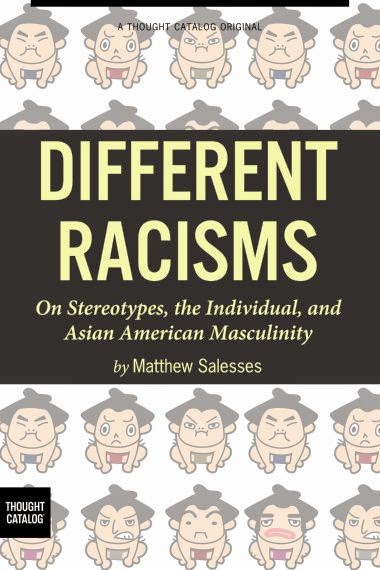
My wife, born in Taiwan, and I have talked about kids, including the possibility of adopting a child of Chinese descent. While reading Different Racisms: On Stereotypes, the Individual, and Asian American Masculinity by Matthew Salesses, I was regularly shocked into questioning my decision to raise a child with Asian background.

Sunday, October 12, 2014

iPhone 6 Sale Reveals Ignorance and Indifference in Action -- Part 2 of 2

Photo: Silicon Angle.

The other day, I discussed how Chinese immigrants standing in overnight lines for the iPhone 6 in New York unleashed considerable ignorance and hate by tech lovers and other observers.

Today, we look at another "hot topic" revolving around the iPhone 6 release: the so-called "bendgate". Some early iPhone 6 owners have complained that the cover of the iPhone 6 can be easily bent and damaged.

Friday, October 3, 2014

iPhone 6 Sale Reveals Ignorance and Indifference in Action -- Part 1 of 2

A couple of weeks ago, the iPhone 6 went on sale with incredibly long lines forming outside Apple stores. Around the world, many of the people in the lines were Chinese.

The iPhone 6 had not yet been permitted to go on sale in China, so a resale market was immediately created in which Chinese people (often older, low-wage immigrants) would line up 12 or more hours ahead of the opening, buy one or more iPhones, and then immediately give them to an intermediary outside of the store. The person in line would receive a fee of a couple hundred bucks for their service, and the intermediary would proceed to resell the phone in China for a 100-200% mark-up.

In New York, this process was recorded and published on YouTube by a self-professed "big tech nerd" who "slept on the streets to get the very first iPhone". The video (shown below) was originally titled the "Chinese Mafia Takes Over iPhone 6 Lines", demonstrating deep ignorance and/or prejudice by the filmmaker. After major news outlets rebuked the mafia claim, he changed the title of the video to "Black Market Takes Over iPhone 6 Lines". But it was too little too late. The seeds of hate had already been planted. Just take a look at the comments in the video to get a rough idea of the terrible prejudice that exists toward and within the East Asian community.


This film breaks my heart. Money-strapped immigrants, following the law and just trying pull in a couple extra hundred dollars, are harassed by police while sleeping on dirty sidewalks in garbage bags. This film really is an allegory for so many major influences in the U.S.: immigration, capitalism, inequality, and prejudice.


Sunday, September 28, 2014

An Open Letter to American Men

Dear Fellow American Men,

Why do so many among us hate women? The amount of harassment and violence we inflict on our American sisters is astounding. Millions of women are physically or sexually assaulted every year.

The tremendous number of rapes perpetrated on female college students is one issue that has gained more attention as of late. A relatively well-known case is that of Emma Sulkowicz, a Columbia student that was raped by a classmate her sophomore year. But Columbia administration meted out little to no punishment for the offenders in Emma and other female students' cases. Leniency toward offenders is a common theme for college rape.

What's sickening is that some of us (men) blame women for their own rape: "When a woman wears clothes like that, she's asking for it", "This is why women shouldn't get drunk at parties", "She shouldn't have gone to the party without bringing a friend". We say these things oblivious to how unjust it is that men can roam free wearing and drinking whatever they want while women must vigilantly prevent their own rapes.

Saturday, September 20, 2014

"Socially Responsible" Capitalism Still Feeds the Disease

As part of an excellent analysis piece on the concept of social responsibility, I did an interview with journalist Toshio Meronek for Truthout. The article really touches on issues located at the root of the state of business ethics. I've copied the beginning of the article below. The full piece, published on September 16, can be read here.


Capitalism with a conscience? That's the idea behind so-called "socially responsible" investments - buying stocks in companies that are screened for criteria like good labor practices, sustainability and whether or not the company is involved in arms manufacturing. The Forum for Sustainable and Responsible Investment, an industry association, claimed in its latest report from 2012 that at least $3.74 trillion in the United States is invested with environmental and social impacts in mind.

Some socially responsible investments (SRI) weed out cigarette companies like Philip Morris; others shun companies with poor environmental records, like BP. But whichever investments you choose, there's a good chance you'll be profiting off companies with bad human rights records because the backbone of many SRI funds are consumer technology stocks - companies like Apple and Samsung, which have histories replete with labor and privacy abuses.

China Labor Watch (CLW) is one of the groups that investigates ongoing labor problems; Kevin Slaten is its US-based program coordinator. He spoke to Truthout about the reports his organization has conducted on Apple, which started to be heavily scrutinized around 2010 when activists brought attention to child labor in some of the factories used by the computer giant. Some of these same factories were the subjects of protests over a number of Chinese labor law violations and mass worker suicides.

According to Slaten, "We constantly find these symptoms, but the disease underlying these symptoms has not been properly taken care of for years. The disease is these companies want the most amount of products in the shortest amount of time."

Read the rest of the article here.


More Exploitation, More Happiness: How Netizens Responded to a Deadly Factory Explosion


This essay was originally published at 
ChinaFile on September 18, 2014.

It was one of the deadliest industrial disasters in recent Chinese history. On August 2, a massive metal dust explosion killed 75 workers and injured another 186 at a factory in Kunshan, in Jiangsu province, that supplied wheels to General Motors. Asphyxiation killed more than 40 people almost immediately as oxygen in the production facility was consumed in an instant. Many of those who escaped suffered severe burns across their entire bodies as the flames instantly ignited the dust that covered their clothes and skin.

The explosion, like many workplace safety incidents in China, was preventable, and much of the blame for it rests with the factory’s owners and clients. But Chinese Internet users, who spread news of the blast over social media, tended to direct their outrage at the Chinese government, treating the explosion as a symbol of their leaders’ failure to value human life as highly as economic growth, a sentiment mordantly expressed through the popularization of the Chinese phrase “More exploitation, more happiness.”

Friday, September 5, 2014

Media Round-up: Lack of reform to working conditions at Apple supplier Catcher

On September 4, China Labor Watch (CLW) along with Green America published an investigative report (PDF) on a long list of labor and safety violations at factory called Catcher Technology in Suqian, China that manufactures Apple computer and phone parts.

In addition to the approaching iPhone 6, this report followed 16 months after CLW had already reported similar labor abuse to Apple. But Apple failed to take the necessary action to see through reform. 

In the wake of this report, I had a chance to discuss findings and underlying causes with WSJ, The Guardian, the South China Morning Post, and CNET. Voice of America did a Chinese-language interview with me. I also stepped onto CNBC's Squawk Box, which you can view below.

Sunday, August 17, 2014

What is the Chinese Dream?

Over the past three decades, every Chinese Communist Party chairman, upon his taking the reigns of power, has developed a grand guiding principle rolled up into a nifty rhetorical package. Not much unlike U.S. politicians' campaign slogans, in the 1990s, it was Jiang Zemin's "Three Represents" (三个代表), and in the 2000s, Hu Jintao's "Scientific Development" (科学发展观).

Soon after Xi Jinping became the top official in China, he developed a phrase that would become his political slogan: "The Chinese Dream" (中国梦). But amidst increasing amounts of both real and perceived inequality, some in China do not feel that they are enjoying the dream, especially migrant workers who built much of that dream with their bare hands.

Over at ChinaFile, Sharron Lovell and Tom Wang asked a few young Chinese people about their dreams. One of the most memorable quotes for me was from a young man who said:

"If there weren't any migrant workers, it would be impossible for China to develop this fast." ... "The place you live was built by migrant workers. What you're eating was grown by migrant workers. What you're wearing was produced by migrant workers."     
“如果没有农民的话,中国不可能发展这么快。”... “你住的地方农民工建的,你吃的农民工种的,你穿的农民工做。”
See the entire video below.

Wednesday, August 13, 2014

The end of newsies

Child newsies in 1906. "Midnight at the Brooklyn Bridge" -- Photo by Lewis W. Hine. Transfer from Photo League Lewis Hine Memorial Committee. Ex-collection of Corydon Hine. Copyright George Eastman House Collection.
Stepping off the Long Island Railroad train, I look up to catch my bearings. Seventh Avenue is to the right, and I follow the stream of morning passengers toward the steps that lead up into the main hall of the train station.

After squeezing out of the narrow stairway, people around me seem to multiply into a enormous crowd of commuters, filling the large hallways of Pennsylvania Station. The mass of people flows like an urgent river toward the main exit up to the street level. I jump into the stream, bobbing and weaving between groggy businesspeople and office workers.

Wednesday, July 16, 2014

Media Round-up: Child labor at Samsung supplier Shinyang

On July 10, CLW exposed another case of child workers making Samsung products at a Samsung supplier plant in southern China called Shinyang Electronics. Beside child labor, there were a list of 14 other labor abuses, such as 120 hours of overtime per month, unsafe working conditions, and more.

There was a considerable media follow-up on the heels of the report. Among the stories, I spoke on CNN's Quest Means Business and WSJ Live, and interviewed with the International Business Times. The videos are below.

CNN clip


WSJ clip