Showing posts with label US. Show all posts

Sunday, October 1, 2017

Skepticism of Bannon declaring an "economic war" with China

Fresh off steering strategy for a presidential campaign and White House which has damaged institutions and democratic norms in the United States, Steve Bannon flew to Hong Kong in the second week of September to deliver a speech to investors at an event hosted by a Citic subsidiary. He was greeted by protesters outside the venue decrying the toxic politics Bannon is famous for nurturing. 

In line with his nationalist rhetoric, Bannon declared an "economic war" between China and the U.S. during his speech. At ChinaFile, a number of experts discussed the merits of this sort of label for the relationship between the two countries. My small contribution to the conversation is copied below. The entire discussion can be read here.
I question the motives of the messenger. The discussion above, to the credit of its participants, has revolved so far around the merits of using “economic war” as a concept in the discourse of U.S.-China relations and the extents to which China is competing on a fair playing field. But we should be wary of Bannon, a regressive political figure and “alt-right” enabler who craves conflict within the U.S. and apparently war with China, of dishing up a conversation on the policy nuances toward China. Somewhat like the race-based theories of social organization to which his Breitbart faithful adhere, Bannon seems to selectively use bits and pieces of acknowledged fact to advertise a normative argument for deeper conflict, in this case with China.
Many people within the policy and political science community have engaged for years in discussion of the U.S. trade stance toward China and its bucking of international norms and standards. This conversation should continue, inclusive of those across the policy spectrum. But we ought to remain circumspect toward those who may not be engaging in good faith, who do not intend to maintain a just and peaceful world or resort to conflict as a last resort, those who undermine democracy with ethnocentric populism and envision a world divided along such lines. Bannon’s Hong Kong speech is an effort to stay relevant after leaving the chaos he helped mold in the White House.

Sunday, October 19, 2014

Can I Raise Asian Kids in America?


This post was originally published on China Personified.

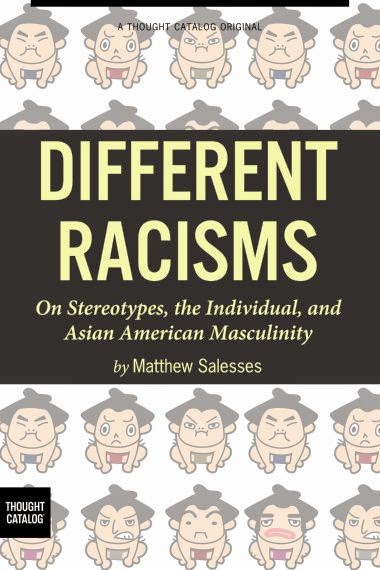
My wife, born in Taiwan, and I have talked about kids, including the possibility of adopting a child of Chinese descent. While reading Different Racisms: On Stereotypes, the Individual, and Asian American Masculinity by Matthew Salesses, I was regularly shocked into questioning my decision to raise a child with Asian background.

Friday, October 3, 2014

iPhone 6 Sale Reveals Ignorance and Indifference in Action -- Part 1 of 2

A couple of weeks ago, the iPhone 6 went on sale with incredibly long lines forming outside Apple stores. Around the world, many of the people in the lines were Chinese.

The iPhone 6 had not yet been permitted to go on sale in China, so a resale market was immediately created in which Chinese people (often older, low-wage immigrants) would line up 12 or more hours ahead of the opening, buy one or more iPhones, and then immediately give them to an intermediary outside of the store. The person in line would receive a fee of a couple hundred bucks for their service, and the intermediary would proceed to resell the phone in China for a 100-200% mark-up.

In New York, this process was recorded and published on YouTube by a self-professed "big tech nerd" who "slept on the streets to get the very first iPhone". The video (shown below) was originally titled the "Chinese Mafia Takes Over iPhone 6 Lines", demonstrating deep ignorance and/or prejudice by the filmmaker. After major news outlets rebuked the mafia claim, he changed the title of the video to "Black Market Takes Over iPhone 6 Lines". But it was too little too late. The seeds of hate had already been planted. Just take a look at the comments in the video to get a rough idea of the terrible prejudice that exists toward and within the East Asian community.


This film breaks my heart. Money-strapped immigrants, following the law and just trying pull in a couple extra hundred dollars, are harassed by police while sleeping on dirty sidewalks in garbage bags. This film really is an allegory for so many major influences in the U.S.: immigration, capitalism, inequality, and prejudice.


Sunday, September 28, 2014

An Open Letter to American Men

Dear Fellow American Men,

Why do so many among us hate women? The amount of harassment and violence we inflict on our American sisters is astounding. Millions of women are physically or sexually assaulted every year.

The tremendous number of rapes perpetrated on female college students is one issue that has gained more attention as of late. A relatively well-known case is that of Emma Sulkowicz, a Columbia student that was raped by a classmate her sophomore year. But Columbia administration meted out little to no punishment for the offenders in Emma and other female students' cases. Leniency toward offenders is a common theme for college rape.

What's sickening is that some of us (men) blame women for their own rape: "When a woman wears clothes like that, she's asking for it", "This is why women shouldn't get drunk at parties", "She shouldn't have gone to the party without bringing a friend". We say these things oblivious to how unjust it is that men can roam free wearing and drinking whatever they want while women must vigilantly prevent their own rapes.

Thursday, November 17, 2011

中国学生需要的不是恐怖而是鼓励 Chinese students need encouragement, not fear

(The English version is below the Chinese version.)

最近,在《外交学者》杂志上,姜Xueqin(不知中文名)写篇关于中国学生融入美国大学生活困境的文章。他认为这个社会问题基于中国与美国文化之间的基本差别,即“文明冲突”。他这个观点不仅是错的,而且他没提出对这个问题的任何解决办法。

姜先生争论由于中国的崛起正在挑战美国享有世界霸权的地位,因此美国大学生受到威胁并排斥中国学生。可是,姜先生的逻辑犯了一个经常又关键的逻辑谬论,即正比关系等于因果关系。而且,他把宏观层面上的事情与微观层面上的现象搞混。实际上,中国正挑战着美国的地位,中国学生的确是难以参与没大学生的生活,但是这两个现象同时出现不一定意味着两个之间有因果关系。

Friday, May 7, 2010

NYC Bomber, Faisal Shahzad: Lone Wolves Are Also Bad Omens


By Ashesh Prasann
The failed Times Square car bomb attempt which came to light this weekend is tough to analyze because the investigation is not yet complete and there is still uncertainty about the facts. Gen. Petraeus has recently ruled out Pakistani Taliban’s involvement, describing Faisal Shahzad, the individual arrested for attempting the attack, as a “lone wolf”. 

Wednesday, April 14, 2010

When Superpowers Fall

History has demonstrated that power in the international system is rarely static. But, while empires are now falling at an increasingly rapid pace, today’s power transitions are more peaceful than they have been for much of the past few thousand years. These changes have seen two opposing trends strengthen simultaneously—one that gives the world’s preeminent power more security, the other making it more uncertain of its position at the top.

Wednesday, February 24, 2010

Young People Will Save U.S.-China Relations

Here's my post from today's blog on RearClearWorld:

Recently, Gallup surveyed Americans on their views of other countries. Some of the results have been mentioned already on this [Compass] blog.

The results are particularly notable for the age-group breakdown.

Americans_world--age_breakdown.gif

A solid 62% majority of 18 to 34 year-old Americans had a favorable view of China at the beginning of February. Compare this to the general population: 42%. At the same time, in a 2007 survey (PDF) by the Committee of 100, 69% of Chinese 18 to 29 expressed a positive view of the U.S., where the general population was at 60%.

In general, younger people in both surveys are more likely than their older countrymen to throw love at other nations. But this doesn't make the results less significant. Rather, young people might be more internationally-oriented than previous generations.

More than their parents, young people in America have traveled to China, watched Chinese movies, and etched Chinese character tattoos on their arms -- whether or not they know the meaning. In China, youth have increasingly lived or studied in the U.S., learned English, and, as a result, watched a daily assortment of American TV shows and movies. This is all good for future U.S.-China cooperation.

Unless, of course, you're over the age of 34. In your case, those damn kids don't know anything.

Monday, February 15, 2010

China's Preparing for Oil Scarcity, But Is America?

The economic recession is now out of its most acute phase, but the systemic damage and slow recovery will be felt for years in many Western countries, particularly the U.S. Conversely, China grew at about 8% last year and a top Chinese think tank has predicted10% growth in 2010. As China roars into its year of the Tiger, America will be dealing with high unemployment and low single-digit growth for half a decade or more.

Wednesday, June 3, 2009

Made in the USA -- Owned in China?

There are three recent and interesting cases of Chinese businesses buying into American brands. First, in order to receive public money, Morgan Stanley had to raise some private funding. As a result, China's sovereign wealth fund now has a 10% ownership stake in Morgan Stanley, America's sixth largest bank.

Second, two Chinese investors, Jianhua Huang and Adrian Cheng, are buying a 15% combined stake in the NBA's Cleveland Cavaliers. (Incidentally, this is my hometown team.) The move by Cleveland may have a lot more to do with globalizing the team's brand than budget problems. Cleveland hopes to entice the team's phenom, LeBron James, who could be fancying a new city after the Cavs were beat -- yet again -- in the late stages of the playoffs.

Lastly, a Chinese industrial company, Tengzhong, is expected to close a deal later this year on total ownership of Hummer. General Motors, Hummer's current owner, chose to sell off Hummer as part of its restructuring deal with the federal government. 

These three bids are important for a few reasons:

1) They represent the larger economic trends underway in the US and China. During this deep and long recession, the US contracted by 6% in the first quarter of 2009 while China grew by the same amount. China has taken a hit in its export sector, but its large government stimulus and considerable investment has left many Chinese companies in strong positions. Meanwhile, the US market has made penny stocks out of heretofore dependable behemoths -- such as GM -- and these firms are cutting jobs or going belly-up. In some cases, then, Chinese companies are well-suited to buy up these quintessential American brands while the market price is dirt cheap and the US companies are desperate for cash. In short: China and its businesses are gaining from the economic destruction taking place in America. 

2) Relatedly, such investment is ultimately good for the US economy. America's deflation is worsened by the lay-offs produced by businesses shutting down. Every Chinese firm that saves a US firm from liquidation helps to counter deflationary pressure. For example, Tengzhong's buy-out of Hummer will keep employed 3,000 factory workers as well as employees at 100 Hummer dealers.  

3) These investments are signs of deepening globalization. As Chinese entities take more ownership in US entities selling in the American market, China's fate will necessarily be more connected to the fate of America. Even though the pattern, until recently, has been interconnection via cheap Chinese exports and incredible American consumption, this new direction should be expected to become more common. Furthermore, heightened interdependence will make official Sino-US relations more complicated. But at the same time, it may also assure that the relationship remains peaceful. 

Of course, you may have a problem with the loss -- partial or total -- of big American brands to foreign entities. (A "quasi-American" Hummer just doesn't have the same patriotic appeal.) I would offer a couple responses. First, if it is any comfort, most components for your favorite American products have been coming from abroad for many years. Second, find a positive coping mechanism. Globalization is quite unlikely to go away, particularly during the most globalized recession in human history.

Thursday, May 21, 2009

Obama eats his own words

Want to know what a contradiction sounds like when it comes out of a highly intelligent, eloquent lawyer? Watch or read President Obama's speech today on Guantanamo Bay Prison and the detainees held there.

To be fair, Obama delivered a detailed, well-prepared response to many of the recent falsehoods being spewed about this topic. The transcript reads like a well-balanced discussion by a professor. And he ought to be commended for many of the steps he's taken to uphold his commitment to close Gitmo and deal with its prisoners in a legal manner -- which were major campaign promises. (Some of these steps include banning torture, sticking to the closure of the prison, and reviewing every case.)

But a detailed and thoughtful argument does not necessarily mean a logical one.  

Obama says that each of the 240 remaining cases will fall into one of five categories: 
1. Try them in federal court under criminal laws.

2.  Cases that include "detainees who violate the laws of war and are, therefore, best tried through military commissions." But these commissions will be reformed to fall in line with the Constitution -- torture cannot be used as evidence, hearsay is more scrutinized, and greater rights for detainees to choose their counsel.

3. Those that are deemed innocent and will be released: "The courts have spoken. They have found that there is no legitimate reason to hold 21 of the people currently held at Guantanamo."

4. "The fourth category of cases involves detainees who we have determined can be transferred safely to another country. So far, our review team has approved 50 detainees for transfer." 

5. Those "who cannot be prosecuted yet who pose a clear danger to the American people." The next quote is critical: 

"We're going to exhaust every avenue that we have to prosecute those at Guantanamo who pose a danger to our country. But even when this process is complete, there may be a number of people who cannot be prosecuted for past crimes, in some cases, because evidence may be tainted, but who, nonetheless, pose a threat to the security of the United States... Examples of that threat include people who've received extensive explosives training at Al Qaida training camps or commanded Taliban troops in battle or expressed their allegiance to Osama bin Laden or otherwise made it clear that they want to kill Americans. These are people who, in effect, remain at war with the United States. Let me repeat, I am not going release individuals who endanger the American people."

A minute later, the president says, "But if we continue to make decisions within a climate of fear, we will make more mistakes." And at three other points in the remarks, Obama stresses the importance of avoiding "fear-mongering" (his words) when discussing national security.

These two sets of quotes are, of course, a stark contradiction. But wait, there's more! A third set of incongruities: Obama spoke frequently about the need to uphold the rule of law and the values of the United States. The most instructive quote: "I took an oath to preserve, protect, and defend the Constitution as commander-in-chief. And as a citizen, I know that we must never, ever turn our back on its enduring principles for expedient's sake."

I will simplify these three premises to make the fallacy more clear (contradiction in bold):
1. Rule of law will be upheld.
2. Appeals to fear are illegitimate means to make important decisions.
3. Some detainees will not be subject to the rule of law because Anericans should be afraid of the extraordinary security threat that they pose.

(I am not the only one that spotted this contradiction.)

One particular thing bothers me about this contradiction. As stated before, Barack Obama is a genuinely intelligent person trained in the art of logic. Thus, there is a reasonable chance that he knows, with a clear head, that he is rhetorically lying. There is no rational way that he can simultaneously uphold numbers 1, 2, and 3 above. So unless he has made a mistake, Obama is insincere about at least one of them. This bothers me. It ought to bother you. 

Leaving aside the extremely disappointing possibility that President Obama lied, there is the separate but (more) important problem of what to do about these detainees that continue to "pose a threat to the security of the United States." 

The solution: try to rehabilitate them and then let them go.   

First, the rehab step. Many of these prisoners are ideologically motivated and justify their violence through their religion. One way to change these motivations is to convince them to reinterpret their religion in a way that delegitimizes violence. It is performed by allowing religious scholars -- Islamic clerics in this case -- to argue with prisoners about doctrine. Rehab is a highly successful tool in Singapore, Saudi Arabia, and the US military in Iraq. (Here's a more detailed article on rehabilitation and its success.)

Second, whether or not rehab ultimately works, prisoners must be let go if they are not found guilty under the rule of law. This happens every day with people in the US prison system who have been trained with or have grown up within violent gangs, openly express hate toward other gangs or groups of people, or who could possibly kill Americans. Although they are effectively the same as Gitmo detainees, we would not claim that "they are at war with the United States." 

True, compared to the average citizen, these prisoners are more likely to commit a crime. But these are the sacrifices that we make in a system of law. Furthermore, if exceptions can be made for them, then they can be made for you.

Sunday, April 19, 2009

An Obama Administration Misstep on Engagement

A couple of weeks ago, I posted some positive news about two US moves to boost its international authority through diplomacy -- joining the United Nations Human Rights Council and having an initial high-level meeting with Iran. 

But unfortunately, the consistency of engagement has faltered a bit. Recently, the Obama administration has pulled out of a large international conference on anti-racism, hosted by the United Nations. After some negotiations on the wording of the conference communique, the US left the negotiations due to disagreement over deeming 'defamation of religion' as racism as well as wording that tries to equate Zionism (i.e. Israeli claims to territory and treatment of Palestinians) with racism. 

Although both of these definitions of racism are objectionable for many (including myself), obviously there are a considerable number of people that believe in the wording or else it would not be a debated issue. (The religion and Zionism issues are supported by the 56-nation Organization of the Islamic Conference.) But as I said in the previous post, only by staying engaged in these processes of deliberation over definitions of international norms and law can the US maintain maximal influence over the outcomes. By leaving these negotiations in a huff, the US only manages to diminish its influence. This is the tact that the Bush administration followed regularly; hence the decline of US authority.

The irony in this recent move is that a few weeks ago, in its bid to join the UNHRC, the Obama administration was explicitly espousing the idea of negotiating with those people or governments with which it disagrees. A wise principle. But apparently, consistency in its principles is a problem for the new White House. 

To be fair, all governments falter on upholding stated principles -- insofar as they claim to be following principles. But the degree to which a government falters is key. The Obama administration has pinned a large part of its foreign policy on reengaging with others (refer to Obama speeches during the presidential campaign, his address on Al-Arabiya television, or any recent remarks in Europe). So to begin wobbling in highly visible diplomatic venues on a paramount foreign policy principle seems neither pragmatic nor right. 

The US should recommit to discussions on the anti-racism conference.

Tuesday, March 31, 2009

America's Right Diplomacy

The Obama administration has made two important diplomatic moves today: a high-level meeting with Iran and a bid to join the United Nations' Human Rights Council

In The Hague, Netherlands, a conference on the situation in Afghanistan was being convened. There, US special envoy Richard Holbrooke met with Iranian Deputy Foreign Minister Mohammad Mehdi Akhundzadeh in a brief sideline meeting. Secretary Clinton claims that it was "unplanned". Whether or not this is true, it is a clear step in the right direction. 

Since 1979, the US and Iran have been throwing barbs at one another without formal diplomatic relations. Although lower-level officials have met on numerous occasions in the past, this face-to-face meeting is the first public, high-level communication in three decades. Furthermore, that it occurred at this particular conference is a signal by both sides that there are important issues -- like the stability of Afghanistan -- in which Iran and America share a similar end-goal. 

The other positive move by the Obama administration was its effort to get a seat on the Human Rights Council (UNHRC). Created in 2006 to monitor and recommend action on human rights violation, the Bush administration boycotted the UNHRC because of its membership of countries with questionable human rights records (like China) as well as the Council's numerous criticisms of Israel's treatment of Palestinians. 

Of course, the Bush administration missed the point of an international body. The idea is to get as many countries as possible invested in the international system of norms -- especially a rising power like China. And if it was a prerequisite that every country must agree on the definition of a norm -- in this case, human rights -- before coming together to deliberate, then cooperation would be hopeless. (Try to apply that conditionality to any interpersonal relationship and you would be absent friends or a spouse!) 

By joining the UNHRC, the US will have more influence over the future of human rights going forward. And it is my view that the UNHRC could use some fresh deliberation; last Thursday, the UNHRC passed a resolution aimed to curb criticism of religion. (Here's the text of the resolution.) Without more resistance to hastily passed measures, the UNHRC could become a voice for the restriction freedom of speech, which seems peculiarly devoid of a human's right.

In summary: both of these diplomatic actions by the US are important in their respective issue-areas, but they also signal an increased willingness by the US to work within cooperative frameworks to achieve its objectives. This is a necessary step to winning back international support.

What do you think of these recent events? And do you think that these steps are mitigated by other actions that the Obama administration has or has not taken?

Thursday, March 26, 2009

Congress Attacks the Symptoms

As of today, there are at least five bills making their way through the US House and Senate that address the violence in Mexico (see my last post). And four of those bills have been introduced since March 11. Congress is paying attention.

But are they solving the problem? Not really. It turns out that these bills are great politics but half-hearted policy. The bills look like quick, resolute action to solve a problem that is increasingly threatening Americans. But every bill accounts for only the symptoms of the root cause -- criminalized drugs in the US. 

To clarify this point, let's do a quick review of the bills:

1. H. Res. 258: primarily a position statement. It says that the US government supports President Calderón's struggle against the cartels in Mexico, will continue to provide resources and training to Mexico and its security forces, is committed to securing the border, and is committed to fighting drug crime. It's mostly principle; not a lot of 'there' there. But to be fair, it is a resolution, which tend to be more symbolic.

2. HR 495: provides $15 million over two years to step up efforts to stop illegal firearm smuggling to Mexican gangs.

3. HR 1437: provides $10 million over 5 years to fund a "Southern Border Security Task Force" to protect border communities in the US from drug related violence as well as to fight drug smuggling.

4. HR 1448: provides $150 million annually for additional border security and firearm tracking. 

5. S. Res. 72: identical Senate resolution to H. Res. 258.

Congress is scrambling to throw funds at "fighting" and "protecting"; these are great words for appeasing constituents. But the US has been fighting a "war on drugs" for years without successfully curtailing illicit drug use. At best, these bills will account for symptoms of a black market for drugs.

Less they look forward to years of increasing funds to sustain border task forces, the US people need to urge their Congressional representatives to legalize drugs -- beginning with marijuana.

There are hundreds of millions of dollars of government spending in the five bills above. Yet ironically, if drugs were decriminalized, then the net gain for the government in tax revenue would be billions of dollars annually. 

The most effective action in Congress would contain measures to reduce the demand for illicit drugs. Don't hold your breath.

I want to thank Sue Ann for sending me all of the great information on these Congressional bills. 

Friday, March 20, 2009

When Reality Comes Knocking...

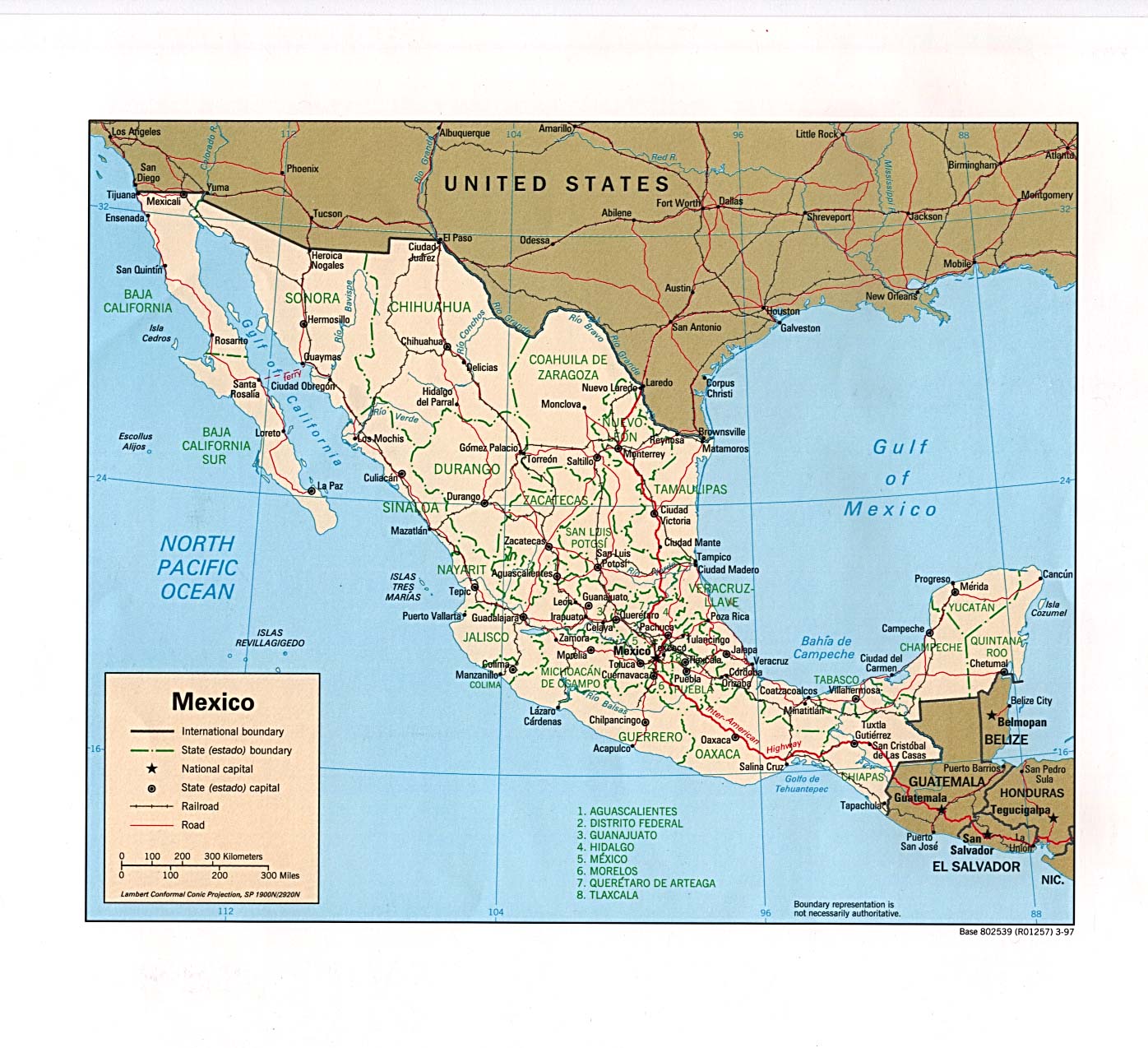
Given the lack of coverage in America's broadcast news, you could be forgiven if you did not notice the escalating drug war in the US's southern neighbor, Mexico. In short, President Felipe Calderón has stepped up efforts to fight drug cartels that have become powerful enough to be considered the de facto leadership in some states and cities -- such as Sinaloa and Juarez, respectively. The organized, wealthy, and well-armed cartels have reacted with intense violence, killing more Mexicans last year than all American soldiers killed in the Iraq and Afghanistan Wars combined. But fortunately -- if murder can ever can be considered "fortunate" -- most of the deaths are gang members, in the process of desperately struggling for territory. (Another good article on the situation.)

This is important for at least two reasons. First, the violence affects the lives of many Mexicans and threatens the society, in general. Second, killing, kidnapping, and increased migration (from desperate civilians in Mexico) is affecting the US.

The circumstance has become this dire for a few reasons -- two of which directly involve the US. First, for too long, these gangs had been left to their own devices or paid off police to leave them be. And continued failure by Mexico's presidents to reform the police has allowed cartels to grow roots in their respective territories. Second, many of the weapons the gangs are currently using to kill thousands come from 6,600 US gun dealers on the Mexican border who frequently sell weapons to middlemen, who then turn around and sell to the gangs. 

Third, and most importantly, the bulk of Mexico's drug trade is still feeding the US black market for marijuana.

Given the contributing factors, the solution must be matching. President Calderón has made reversing the first factor -- competent security and governance -- the centerpiece of his term. 

The second issue, guns, must be dealt with from the US side by much stricter regulation and tracking over gun sales. For example, new laws could require that gun purchasers prove their continued possession periodically -- maybe every few months. 

But as I alluded to before, the third factor is central: the demand for illegal drugs. And the obvious solution -- legalization -- is the reason why the US discussion of Mexico's violence is either insincere or ignored altogether. Take George Will's recent column, for example. He goes on for 90% of the article about the problem of violence spilling over into Arizona, but when it comes to the reality of confronting the problem, he writes one sentence:
Whatever the merits of legalization -- and there are certain to be costs -- it will not happen in the foreseeable future, which is where Arizonans must live.
Shrugging it off sure is easy, huh? 

I am not going to undertake a long argument for legalization here -- and I'd like to hear your opinions on it in the 'comments' section. (Besides, many have done a much more competent job than I could right now.) I will confine myself to the most relevant reason: drug cartels will figure out a way to get their products to the tens of millions of Americans who use them -- and will continue to do so -- as long as there are not legal channels. Put another way, the demand is a constant; the only malleable issue is who is supplying the drugs -- a gang or stores. 

Americans can continue to deny or ignore the reality at America's door. But what happens when it bursts in anyways?

March 22 - Update: for a better idea of the massive and profitable industry of marijuana in the US, read this article. (The article is from Foreign Policy magazine, but the FP website is having problems right now.)

Saturday, March 14, 2009

Barack W. Bush?

Is the foreign policy of President Obama no different from that of George W. Bush? Bob Kagan wrote an article in the Post last week arguing just this.

Kagan, a foreign policy scholar at the Carnegie Endowment, claims that in the most urgent foreign policy challenges facing the US -- North Korea, Iraq, Afghanistan, Iran, democracy and human rights -- the new White House is essentially continuing the trajectory of America's last administration. Kagan says that the only difference is in the rhetoric, where Obama has declared a new type of foreign policy.

But Kagan is wrong for two broad reasons. First, in some ways, Obama policy really has departed from Bush. For example, Obama is undertaking a different strategy in Afghanistan. Where Bush would not negotiate with the Taliban, Obama's team has made it clear that the Taliban are not one monolithic group and should be treated as such -- some militants can be reconciled through negotiation. 

The second reason Kagan is mistaken is that he discounts the change in style as an unimportant. (Of course, as one of the leading realists in the world, Kagan may be irreconcilable on this issue.) True, rhetoric is not the same thing as action. But authority is not only derived from what you do. It is derived, in large part, through consent. Trust matters.

To the rest of the world, Iraq and the "War on Terror" under Bush was tied to America's larger disregard for international law and the interests of people from other countries. Iraq was an illegal war, "Axis of Evil" was an arbitrary justification for aggression, the "War on Terror" became a codified war on Islam, Guantanamo Bay took away the basic rights of hundreds, and torture was kicking dirt on the Geneva Convention. In the eyes of others, the US had become a bellicose, unilateral superpower.

Even though Obama policy, on the ground, has not changed drastically from Bush, Obama's symbolic overtures have made a profound difference in regaining America's moral authority around the world. Let's be honest, Guantanamo Prison now only holds a couple hundred people, so the closing of that prison is not affecting large populations. But the gains in authority around the world are profound. The same can be said for ending the practice of torture and committing to a more cooperative approach in foreign policy. By submitting itself to a more consensual system of international rules, the US regains authority. 

And this authority will matter in significant ways in the future. Two examples: 1) countries are more likely to follow international law if the most powerful countries in the world are doing so. At the very least, it takes away an excuse for not abiding by law -- think Iran or Russia. 2) Fewer individual people may feel compelled to formulate grand, violent plots against Americans as a form of vigilante justice for the law-breaking USA. In other words, rebuilding authority would mitigate one of the contributing factors to terrorism.

In discussing the importance of symbolism and consent with one of my colleagues, I used the example of a book. Imagine you have a favorite book. Scenario one: an acquaintance takes the book from you and, after you fret over where it went for a few days, tells you that they borrowed it. Scenario two: an acquaintance asks you if they can borrow the book before you graciously allow them to do so. In both cases, the exact same thing is happening in regards to the book (it goes into the possession of the acquaintance), thus the prior consent for borrowing the book is symbolic. But in the first scenario, you will surely be more irritated because you did not give consent. The consent is what gives the acquaintance the authority to possess the book.

Without consent, America's actions eroded its authority for most of the past eight years. Would the effect of Iraq War not have been profoundly different if it had been authorized by the United Nations? Obama is not leading a revolution in foreign policy. But if his change in approach leads to a world in which others don't feel threatened by American power, then that is a clear departure from the feelings invoked by Bushian foreign policy.    

Note: my thesis at The Ohio State University was on the subject of US authority in international relations. You can read it here.

Sunday, March 1, 2009

New Taxes on the Wealthy Unfair?

Are higher taxes for the nations top 5% a clear example of governmental overreach? 

Anyone who followed the presidential campaign could see this battle coming for months. President Obama recently announced his budget, which includes plans to expire the tax cut for Americans that make over $250,000 annually. As soon as it was announced, the debate began -- just on time -- about whether or not this is fair. 

In a recent LA Times article, Brian Riedl of the Heritage Foundation, a think tank, said that under Obama's plan, the top 20% of taxpayers in the US will pay 90% of all taxes. I had a hard time finding information that verified this claim. But let's suppose that Riedl's numbers are accurate. Initially, this may sound like a crime. Yet a look at reality would tell you that such a tax burden is actually in line with the distribution of resources in America.

In 2001, the top 20% of the richest in America owned 91% of financial wealth and 84% of net worth. The top 10% also had about 85% of all investments (stocks, bonds, trust funds, etc.) and 71% of net worth. This book (see pp. 28-34) and this study (chapter 5) -- among many others -- find the same results. And all of this was before the Bush tax cuts had a chance to accelerate the rate of inequality.

In reality, then, the new taxes match the reality quite well. On principle, it is simply fair. But there are other concerns.

One complaint is that these taxes are simply meant to redistribute wealth and make everyone economically equal. But this is not even a possibility. Just because the wealthiest pay most of the taxes doesn't mean that it reduces their wealth. To the contrary, the richest Americans' wealth is increasing far faster than taxes can reduce their wealth. According to Congressional Budget Office data, from 1979-2004, the top 1% saw their annual income rise 176%. The top fifth gained a 69% rise in their income.  The middle 3/5 saw a 20-30% increase, and the poorest 20% saw only a 6% increase in their income. Compared to the median income increase over the same time period (about 10%), the poorest fifth in the country are actually more poor than 30 years ago! (And the top 1% made out like gangbusters.) 

So the wealthiest in America have nothing to worry about if they think that they'll be taxed out of prosperity. Their huge income advantage and almost total ownership of investments will prevent higher taxes from regressing their wealth.

Another complaint goes something like this: rich people work harder for their wealth and should not have to give any more of it back to society. This is essentially saying that 20% of people in the United States work four times harder than the other 80%. Please! I won't even dignify that with a response.

Then there is the pragmatic side of this whole issue. The bottom 80% of American wealth-owners, and especially the bottom 60%, are struggling. The bottom 90% of wealth-owners have 74% of the nation's debt. True, some blame can be relegated to irresponsbility of borrowers and lenders -- living beyond means and trying to make money off of predatory lending. But many people are in debt simply because they have to be. Very few Americans can attend a university, own a home (no matter what size), or start a business without significant debt.   

And these debts were already a problem before the recession. Now they are breaking people's back. 

The point here: the government needs revenue to provide the services, projects, and credits (for school, homes, and businesses) that the far majority of Americans require. That money must come from somewhere (other than borrowing abroad). Some of it will come from cuts in ineffective programs; some of it will come from taxing the wealthy. It's dollars and sense (pun intended). 

Therefore, these tax measures are both principled and pragmatic. The wealthiest are going to be just fine.
 

Wednesday, February 25, 2009

Obama's Missing Piece

As many of you well know, President Obama delivered his first State of the Union Address last night. (Okay, it wasn't technically a "State of the Union Address", but for all intents and purposes, it acted as one.) As expected, his focus was planted solely where it should be: on repairing the sorry state of the domestic economy and attending to neglected domestic policies. But what was urgently missing from these remarks was enough attention to challenges outside of US borders, particularly a vision for the world.

To be clear: Obama's priorities seem to be in the right order. Yet the weight he gave each priority in his address to the nation was skewed too much toward domestic priorities. Put another way, prioritization is not the same as single-mindedness.   

Before going on, though, it should be stated that his domestic policy seemed well-organized, smart, and focused on the right areas. Beside the immediate stimulus plan, Obama said that he would focus his energy on three areas: energy, health care, and education. He talked about instituting a carbon cap in the US market and making clean energy technology profitable. Although he shrugged off the specifics of a health care plan, Obama rightly stressed the importance of universal health care for competitive business and the significance of preventive health care. (A note: Obama has made a clear political commitment to obtaining universal health care within a year when he said health care reform "will not wait another year." If he fails, then this could drain a good bit of political capital.) In education, Obama declared that the high high school drop rate would be reigned in and that significant college tuition credits would be given to students in exchange for volunteering. These are all positive steps to take.

And attending to all three issues is imperative for the long-term health of the US economy. But so is a global system of free trade, a halting of climate change, and stable international relations. Of course, none of the the latter concerns can be attended alone. 

Yet of Obama's 5,902 words spoken last night, 515 were in reference to foreign policy. That's 8%. In an hour-long speech, that is about 5 minutes. 

I don't want to overplay the numbers; they are relatively arbitrary by themselves. But it gives you an idea of the lack of attention given to foreign policy.

More importantly is what the remarks lacked in substance. In three sentences, Obama said that he would soon be unveiling his policies for Iraq, Af-Pak, and the general struggle against terrorism. Then he paid respect to American troops and spent a couple sentences denouncing Guantanamo and torture. 

For the moment, let's forget that he provided no specifics on the important issues above. Understandably, this was not the forum to discuss the nitty-gritty of securing the Federally Administered Tribal Areas in Pakistan. As promised, Obama will likely roll these details out in the coming weeks.

Then the president went on to make a valiant -- but failed -- effort at presenting a grand foreign policy. He stated that the US needs the world just as the world needs America -- a true statement. Obama declared that a "new era of engagement has begun" in which the US will negotiate with friends and foes alike, using "all elements of our national power" to tackle global problems in concert with other nations. This sounds very near to Joseph Nye's concept of smart power. (Clinton invoked the term explicitly in her confirmation hearing -- see page 4.) Obama even goes on to give the approaching G20 meeting in April as an example of how the US must engage with the world.

But neither engagement nor smart power is a grand strategy. They are tools in a foreign policy toolbox. They are means to an end. But what end? 

Sure, we want a stable Afghanistan, a democratic Iraq, a stop to climate change, peace and development in Palestine, etc. Everyone can agree that they want the most pressing problems resolved. But it is not enough for any country, especially a global superpower, to leap from crisis to crisis, reacting to flashpoints as they present themselves. The US must have a vision. America must actively shape the world it wants to see five, ten, or twenty years from now. 

And on a bureaucratic level, a lack of grand strategy is destructive. If the scores of policy planners in the State Department, Defense Department, and Commerce Department are not linked by a common overarching strategy from the White House, then the administration risks disparate and conflicting policies across issues and regions. Policy planners must have general guidelines from which to work.

Far be it from me to declare the grand vision for the United States, but there are various strategies that could be pursued by the US for, let's say, the year 2025. (Conveniently, I will pose them as rhetorical questions.) Should the US still be the unquestionable, sole superpower? Should a more robust system of international law regulate state behavior and begin to shape a more powerful world government? Should a multipolar system of 4 or 5 global powers be working together to provide international security? Should all failed states be nonexistent? 

I have a thousand of them. It is easy (and quite fun for policy wonks) to come up alternative visions for the world. But this should not be an academic exercise. It is a governing necessity. 

After last night's speech, we all know what the ideal US economy would look like under the Obama Administration: buildings powered by solar panels, booming clean energy companies without the burden of employee health care, and a population dominated by a highly educated workforce.   

But based on last night's remarks, I defy you to tell me what the ideal international order would look like under the Obama Administration. You cannot. And that is the missing piece.    

Friday, February 20, 2009

Gandhi He is Not.

This month, Martin Luther King III, leading a delegation of prominent civil rights leaders, retraced the Indian path that his father traveled in 1959. King Jr. went to India to learn methods of nonviolence from Mahatma Gandhi before taking these lessons back to America and leading one of the most successful nonviolent campaigns in history. 

King III's trip was described recently in a Washington Post article. At the end, the article discusses the nonviolent struggles of Gandhi and King being continued by Barack Obama. Representative John Lewis (D-Ga), a leader during the civil rights movement, was quoted as saying, "Many years ago, Gandhi showed the world that nonviolence was one of those immutable principles in the struggle for justice. Today, everybody in the world feels, 'If Barack Obama can do it, so can I.' " 

Barack may yet still prove to be an historic leader of social change. But Gandhi he is not.

These comparisons of the president to King and Gandhi, about which I have too often heard and read, need to stop. 

You might wonder why I would take the time to make a fuss about this. And my reason is simple: Obama is not nonviolent. As admirable as Obama's rhetoric and many of his actions have been, the courage to lead a nonviolent campaign in the face of severe hate, blatant oppression, and death threats exists on another tier altogether. 

It is incredible that the success of the Indian independence movement, American civil rights movement, and Czechoslovakian Velvet Revolution was driven by the suffering and instinctual fear overcome by millions. These struggles were a refusal to meet cruelty with cruelty, hate with hate. At its core, nonviolence is the most honorable of strategies. It is both an appeal to your aggressor's humanity as well as an adamant conviction to keep your own. 

President Obama has already allowed three Predator drone attacks in Pakistan since he took office, killing dozens of people. And he will continue to fight the war in Afghanistan with military force. Implicitly, then, Obama is supporting social change through violence -- obviously the opposite of nonviolence. 

This is neither meant to be an indictment of Barack Obama nor a discussion of whether or not nonviolence is realistic on the international level. (Though it may be.) Indeed, as the political leader of the most powerful country in the world, you can be sure that Obama would have never been elected if he had declared on the campaign trail that the US would eschew all violence under his presidency (see: the campaign of Dennis Kucinich).

That said, stop comparing the nonviolence of Gandhi, King, and others to the political movement of Obama. I admire the president for many of his principles, but none of those is the refusal of violence as an instrument of change.   


Wednesday, February 11, 2009

An Approaching Power Shift

In January 2009, more autos were sold in China than the United States. 

This is significant. It is yet another indication of the gradual power transition to which we all are witness. 

Of course, China surpassed the US in car sales last month due, in part, to the grinding recession in America. Furthermore, China has an annual boost in sales during the Spring Festival at the end of January. So for 2009, expect to see the US with more sales altogether.

But this news is important not because of the auto numbers themself; rather, it is important because it means that China is within "striking distance" now. A decade ago, the same slowdown still would have left the US far ahead of other countries in auto sales. But today, after a decade of 10% annual growth, China will periodically begin to surpass the US in some raw economic measures.

Before long, the US will enter a neck-and-neck horse race with the Middle Kingdom. With 1.4 billion souls, China can not help but to enter this competition as it develops. Its consumer market will continue to grow. And as this happens, producers the world over will begin to tailor products and services toward China's growing middle class with an abundance of household savings.

This trend should not seem alarmist. Even with the US economy sputtering, China likely will not surpass the US in total GDP for 15-20 years. Furthermore, once it does happen, it does not necessarily portend negative consequences for Americans. There is plenty of room for both nations -- as well as the rest of the world -- to prosper. 

But the effects should also be confronted realistically. Business competition will only get more fierce. With the Chinese market becoming more attractive by the day, the US will lose more business to that country than ever before. Quality of life in America will not increase as quickly as it has in the past as more capital goes elsewhere in the world. People will have to be more willing to move to find opportunities -- possibly even overseas.

However, the most urgent effect of the shift is neither risks to Americans nor benefits to Chinese. It is the risk to the human race. China's selling more cars than the US also signifies the risk to our climate. China cannot develop in the same way as the US has. It must be far less carbon-intensive. And a Chinese society heavily dependent auto transportation -- in its current gas-combustion form -- will magnify climate change severely.

Hopefully this issue tops all others on Secretary Clinton's packed agenda when she arrives in Beijing next week.