Showing posts with label US law. Show all posts

Sunday, February 16, 2014

It just got harder to prosecute corporate abuse

Credit: James Burke via Flickr (Creative Commons)

A Supreme Court ruling in January has made it easier for large multinational corporations to avoid responsibility for its abuses anywhere in the world.

Thursday, January 2, 2014

Snowden case is at the soul of America


On Facebook today, a friend (you know who you are) posted on my wall that some of the labor rights denied to Chinese workers are also regularly denied to American workers. Unfortunately true.

Soon after reading this post, I read the New York Times' editorial that ambitiously kicked off the new year by demanding amnesty for Edward Snowden, the NSA whistleblower now self-exiled in Russia.

How, you ask, is Snowden related to labor rights defense?

Friday, May 7, 2010

NYC Bomber, Faisal Shahzad: Lone Wolves Are Also Bad Omens


By Ashesh Prasann
The failed Times Square car bomb attempt which came to light this weekend is tough to analyze because the investigation is not yet complete and there is still uncertainty about the facts. Gen. Petraeus has recently ruled out Pakistani Taliban’s involvement, describing Faisal Shahzad, the individual arrested for attempting the attack, as a “lone wolf”. 

Thursday, April 8, 2010

Leaked Video of Americans Killing Iraqis

On 5 April, Wikileaks, an organization that reveals once-confidental material, released a July 2007 video of American apache helicopters engaging Iraqis in Bahgdad, including two Reuters reporters and two children. None of the soldiers were prosecuted of wrong-doing.

Wednesday, July 22, 2009

Missing the Point of the Public Option

The following was written by guest author Sue Ann Orsini.

Tonight, President Obama gave a press conference to further discuss the health care reform initiative. (Transcript available here.) A question was asked regarding the public plan option, particularly on whether or not Obama would use his own Administration’s plan if his family members were sick, even if the plan didn’t offer all types of available treatment. The same question was posed by a doctor during ABC’s “Prescription for America” discussion held last Friday. And while the President fumbled his way through a mostly political response at both events, I wondered why he wouldn’t just say the truth – questions of this sort are meaningless and betray a deep lack of understanding about what a public option would mean.

Certainly, these questions illicit emotional responses, particularly fearful mob reactions to the word "socialism" that inevitably pops up when the public plan is discussed, and also anger over long-standing class-based complaints that the rich and powerful always get a better product. For me, asking whether or not Obama would use his public plan overlooks two very important issues. First, a public option may improve the health of the insurance markets by providing competition and regulation of the industry. And second, anyone who insinuates that the Administration’s public option will be the only option has obviously not read the text of any Congressional proposals.

The health insurance market is complex. It's not just composed of big name companies, like Blue Cross or Aetna, but a number of side-players, including Pharmacy Benefit Managers (PBMs), that actually have great influence on cost and sometimes commit outright fraud. Hardly any regulation governs these health care middlemen, and they are left relatively free to set prices. Such rampant manipulation hurts consumers and propagates an unhealthy market. Congress has been aware of this manipulation for years - the courts have, too. Major litigation occurred only a few years ago concerning pharmaceutical price-fixing. And just last Thursday, the Senate Commerce Committee held a hearing to address issues of competition in health care insurance. The public option would attempt to regulate the health care market by providing an alternative to private plans (keyword here is alternative).

As for my second issue, I wonder how many people running around screaming "Socialism!" have actually read the part of the recently introduced House bill concerning the public option. Nowhere in that bill text does it say that we will have to choose the public plan. Nowhere does it suggest that you can't continue with the coverage you have right now. The argument that a public plan will take away your choice and drive us down the road to socialism is a lie propagated by people who fear change. And to those people I would ask this question: Do you truly have a free choice now as to what kind of doctor you can see? Do you truly have a choice as to which treatments you can seek without paying through the nose?

My recent journey into the health care system tells the story - I hurt my back, was constrained as to which doctors, specialists, chiropractors, etc., that I could see through my insurance plan. I was constantly on the phone with my insurance company making sure as to what they would cover. And then, when I transitioned into employer-based insurance, I had to prove to that I'd been covered before in order to waive the "pre-existing condition" clause (something which would be forbidden by the current bill). I may be able to get insurance through my employer now, but I have no choice as to which insurance company I use. Adding a public option into this mix isn't going to make my lack of choices any more or less pronounced. It may improve things.

In the end, much of the discussion over the public plan amounts to nothing more than fearmongering disguised as rhetoric. Fearmongering gets us nowhere and rhetoric can leave a bad taste in the mouth. Check out the latest bill for yourself and come to your own conclusions.

Sue Ann Orsini is a law librarian that specializes in the legislative process. She works in Washington DC.

ALTERATION: on 23 July at 11:43 AM, the title of this post was changed.

Thursday, May 21, 2009

Obama eats his own words

Want to know what a contradiction sounds like when it comes out of a highly intelligent, eloquent lawyer? Watch or read President Obama's speech today on Guantanamo Bay Prison and the detainees held there.

To be fair, Obama delivered a detailed, well-prepared response to many of the recent falsehoods being spewed about this topic. The transcript reads like a well-balanced discussion by a professor. And he ought to be commended for many of the steps he's taken to uphold his commitment to close Gitmo and deal with its prisoners in a legal manner -- which were major campaign promises. (Some of these steps include banning torture, sticking to the closure of the prison, and reviewing every case.)

But a detailed and thoughtful argument does not necessarily mean a logical one.  

Obama says that each of the 240 remaining cases will fall into one of five categories: 
1. Try them in federal court under criminal laws.

2.  Cases that include "detainees who violate the laws of war and are, therefore, best tried through military commissions." But these commissions will be reformed to fall in line with the Constitution -- torture cannot be used as evidence, hearsay is more scrutinized, and greater rights for detainees to choose their counsel.

3. Those that are deemed innocent and will be released: "The courts have spoken. They have found that there is no legitimate reason to hold 21 of the people currently held at Guantanamo."

4. "The fourth category of cases involves detainees who we have determined can be transferred safely to another country. So far, our review team has approved 50 detainees for transfer." 

5. Those "who cannot be prosecuted yet who pose a clear danger to the American people." The next quote is critical: 

"We're going to exhaust every avenue that we have to prosecute those at Guantanamo who pose a danger to our country. But even when this process is complete, there may be a number of people who cannot be prosecuted for past crimes, in some cases, because evidence may be tainted, but who, nonetheless, pose a threat to the security of the United States... Examples of that threat include people who've received extensive explosives training at Al Qaida training camps or commanded Taliban troops in battle or expressed their allegiance to Osama bin Laden or otherwise made it clear that they want to kill Americans. These are people who, in effect, remain at war with the United States. Let me repeat, I am not going release individuals who endanger the American people."

A minute later, the president says, "But if we continue to make decisions within a climate of fear, we will make more mistakes." And at three other points in the remarks, Obama stresses the importance of avoiding "fear-mongering" (his words) when discussing national security.

These two sets of quotes are, of course, a stark contradiction. But wait, there's more! A third set of incongruities: Obama spoke frequently about the need to uphold the rule of law and the values of the United States. The most instructive quote: "I took an oath to preserve, protect, and defend the Constitution as commander-in-chief. And as a citizen, I know that we must never, ever turn our back on its enduring principles for expedient's sake."

I will simplify these three premises to make the fallacy more clear (contradiction in bold):
1. Rule of law will be upheld.
2. Appeals to fear are illegitimate means to make important decisions.
3. Some detainees will not be subject to the rule of law because Anericans should be afraid of the extraordinary security threat that they pose.

(I am not the only one that spotted this contradiction.)

One particular thing bothers me about this contradiction. As stated before, Barack Obama is a genuinely intelligent person trained in the art of logic. Thus, there is a reasonable chance that he knows, with a clear head, that he is rhetorically lying. There is no rational way that he can simultaneously uphold numbers 1, 2, and 3 above. So unless he has made a mistake, Obama is insincere about at least one of them. This bothers me. It ought to bother you. 

Leaving aside the extremely disappointing possibility that President Obama lied, there is the separate but (more) important problem of what to do about these detainees that continue to "pose a threat to the security of the United States." 

The solution: try to rehabilitate them and then let them go.   

First, the rehab step. Many of these prisoners are ideologically motivated and justify their violence through their religion. One way to change these motivations is to convince them to reinterpret their religion in a way that delegitimizes violence. It is performed by allowing religious scholars -- Islamic clerics in this case -- to argue with prisoners about doctrine. Rehab is a highly successful tool in Singapore, Saudi Arabia, and the US military in Iraq. (Here's a more detailed article on rehabilitation and its success.)

Second, whether or not rehab ultimately works, prisoners must be let go if they are not found guilty under the rule of law. This happens every day with people in the US prison system who have been trained with or have grown up within violent gangs, openly express hate toward other gangs or groups of people, or who could possibly kill Americans. Although they are effectively the same as Gitmo detainees, we would not claim that "they are at war with the United States." 

True, compared to the average citizen, these prisoners are more likely to commit a crime. But these are the sacrifices that we make in a system of law. Furthermore, if exceptions can be made for them, then they can be made for you.

Thursday, March 26, 2009

Congress Attacks the Symptoms

As of today, there are at least five bills making their way through the US House and Senate that address the violence in Mexico (see my last post). And four of those bills have been introduced since March 11. Congress is paying attention.

But are they solving the problem? Not really. It turns out that these bills are great politics but half-hearted policy. The bills look like quick, resolute action to solve a problem that is increasingly threatening Americans. But every bill accounts for only the symptoms of the root cause -- criminalized drugs in the US. 

To clarify this point, let's do a quick review of the bills:

1. H. Res. 258: primarily a position statement. It says that the US government supports President Calderón's struggle against the cartels in Mexico, will continue to provide resources and training to Mexico and its security forces, is committed to securing the border, and is committed to fighting drug crime. It's mostly principle; not a lot of 'there' there. But to be fair, it is a resolution, which tend to be more symbolic.

2. HR 495: provides $15 million over two years to step up efforts to stop illegal firearm smuggling to Mexican gangs.

3. HR 1437: provides $10 million over 5 years to fund a "Southern Border Security Task Force" to protect border communities in the US from drug related violence as well as to fight drug smuggling.

4. HR 1448: provides $150 million annually for additional border security and firearm tracking. 

5. S. Res. 72: identical Senate resolution to H. Res. 258.

Congress is scrambling to throw funds at "fighting" and "protecting"; these are great words for appeasing constituents. But the US has been fighting a "war on drugs" for years without successfully curtailing illicit drug use. At best, these bills will account for symptoms of a black market for drugs.

Less they look forward to years of increasing funds to sustain border task forces, the US people need to urge their Congressional representatives to legalize drugs -- beginning with marijuana.

There are hundreds of millions of dollars of government spending in the five bills above. Yet ironically, if drugs were decriminalized, then the net gain for the government in tax revenue would be billions of dollars annually. 

The most effective action in Congress would contain measures to reduce the demand for illicit drugs. Don't hold your breath.

I want to thank Sue Ann for sending me all of the great information on these Congressional bills. 

Friday, March 20, 2009

When Reality Comes Knocking...

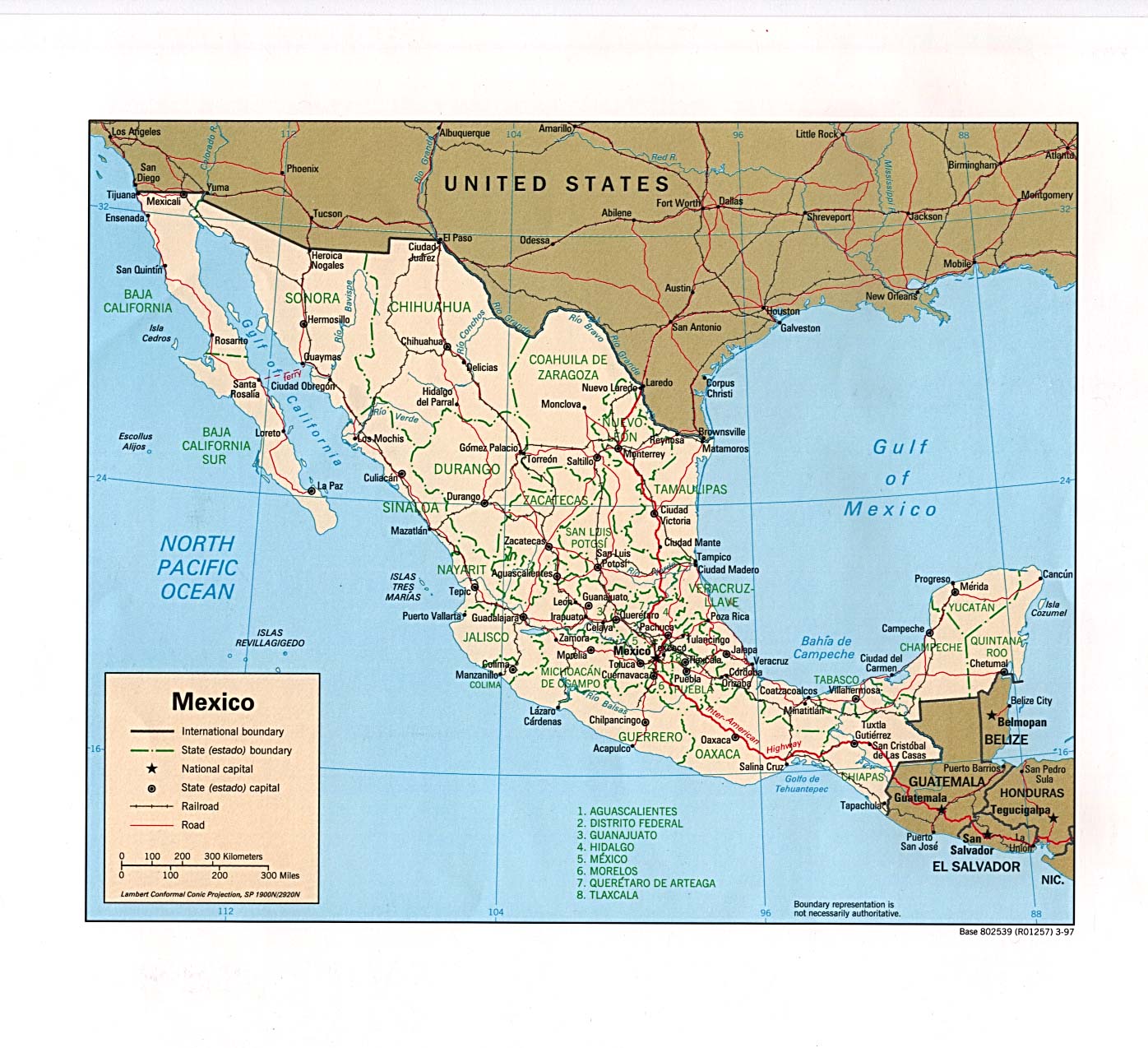
Given the lack of coverage in America's broadcast news, you could be forgiven if you did not notice the escalating drug war in the US's southern neighbor, Mexico. In short, President Felipe Calderón has stepped up efforts to fight drug cartels that have become powerful enough to be considered the de facto leadership in some states and cities -- such as Sinaloa and Juarez, respectively. The organized, wealthy, and well-armed cartels have reacted with intense violence, killing more Mexicans last year than all American soldiers killed in the Iraq and Afghanistan Wars combined. But fortunately -- if murder can ever can be considered "fortunate" -- most of the deaths are gang members, in the process of desperately struggling for territory. (Another good article on the situation.)

This is important for at least two reasons. First, the violence affects the lives of many Mexicans and threatens the society, in general. Second, killing, kidnapping, and increased migration (from desperate civilians in Mexico) is affecting the US.

The circumstance has become this dire for a few reasons -- two of which directly involve the US. First, for too long, these gangs had been left to their own devices or paid off police to leave them be. And continued failure by Mexico's presidents to reform the police has allowed cartels to grow roots in their respective territories. Second, many of the weapons the gangs are currently using to kill thousands come from 6,600 US gun dealers on the Mexican border who frequently sell weapons to middlemen, who then turn around and sell to the gangs. 

Third, and most importantly, the bulk of Mexico's drug trade is still feeding the US black market for marijuana.

Given the contributing factors, the solution must be matching. President Calderón has made reversing the first factor -- competent security and governance -- the centerpiece of his term. 

The second issue, guns, must be dealt with from the US side by much stricter regulation and tracking over gun sales. For example, new laws could require that gun purchasers prove their continued possession periodically -- maybe every few months. 

But as I alluded to before, the third factor is central: the demand for illegal drugs. And the obvious solution -- legalization -- is the reason why the US discussion of Mexico's violence is either insincere or ignored altogether. Take George Will's recent column, for example. He goes on for 90% of the article about the problem of violence spilling over into Arizona, but when it comes to the reality of confronting the problem, he writes one sentence:
Whatever the merits of legalization -- and there are certain to be costs -- it will not happen in the foreseeable future, which is where Arizonans must live.
Shrugging it off sure is easy, huh? 

I am not going to undertake a long argument for legalization here -- and I'd like to hear your opinions on it in the 'comments' section. (Besides, many have done a much more competent job than I could right now.) I will confine myself to the most relevant reason: drug cartels will figure out a way to get their products to the tens of millions of Americans who use them -- and will continue to do so -- as long as there are not legal channels. Put another way, the demand is a constant; the only malleable issue is who is supplying the drugs -- a gang or stores. 

Americans can continue to deny or ignore the reality at America's door. But what happens when it bursts in anyways?

March 22 - Update: for a better idea of the massive and profitable industry of marijuana in the US, read this article. (The article is from Foreign Policy magazine, but the FP website is having problems right now.)

Monday, January 5, 2009

The Price of Qualifications

George Will's recent op-ed is a love-hate essay for me. On the one hand, Will convincingly points out that if not for a 1971 Supreme Court decision, then many more jobs would be available to high school graduates based on the merit of employee examinations. People *should* be hired on knowledge and ability to do the job. The illegality of these tests -- due to discrimination -- has also caused the "measure" for hiring to be a college degree, which in-and-of itself is rather arbitrary. Furthermore, this requirement has put better jobs out of reach for many, many people who cannot afford to shoulder college expenses (especially as tuition costs have risen). 

On the other hand, although I see the logic in that argument -- and agree with it -- I have a hard time agreeing with one of the implications: "Motivating more people to get a college degree is bad." There has been an explosion in Americans attending college -- in part due to the necessity for obtaining a job. And this makes for a more informed, healthier -- college graduates live longer and are happier on average -- population. 

A solution to reconcile this tension: make college affordable!