Sunday, April 19, 2009

An Obama Administration Misstep on Engagement

A couple of weeks ago, I posted some positive news about two US moves to boost its international authority through diplomacy -- joining the United Nations Human Rights Council and having an initial high-level meeting with Iran. 

But unfortunately, the consistency of engagement has faltered a bit. Recently, the Obama administration has pulled out of a large international conference on anti-racism, hosted by the United Nations. After some negotiations on the wording of the conference communique, the US left the negotiations due to disagreement over deeming 'defamation of religion' as racism as well as wording that tries to equate Zionism (i.e. Israeli claims to territory and treatment of Palestinians) with racism. 

Although both of these definitions of racism are objectionable for many (including myself), obviously there are a considerable number of people that believe in the wording or else it would not be a debated issue. (The religion and Zionism issues are supported by the 56-nation Organization of the Islamic Conference.) But as I said in the previous post, only by staying engaged in these processes of deliberation over definitions of international norms and law can the US maintain maximal influence over the outcomes. By leaving these negotiations in a huff, the US only manages to diminish its influence. This is the tact that the Bush administration followed regularly; hence the decline of US authority.

The irony in this recent move is that a few weeks ago, in its bid to join the UNHRC, the Obama administration was explicitly espousing the idea of negotiating with those people or governments with which it disagrees. A wise principle. But apparently, consistency in its principles is a problem for the new White House. 

To be fair, all governments falter on upholding stated principles -- insofar as they claim to be following principles. But the degree to which a government falters is key. The Obama administration has pinned a large part of its foreign policy on reengaging with others (refer to Obama speeches during the presidential campaign, his address on Al-Arabiya television, or any recent remarks in Europe). So to begin wobbling in highly visible diplomatic venues on a paramount foreign policy principle seems neither pragmatic nor right. 

The US should recommit to discussions on the anti-racism conference.

Saturday, April 11, 2009

Frank Gaffney's "Freedom Rule"

On Thursday evening, I attended a debate with my good friend and colleague, Ali Wyne, at the New America Foundation. The clash was between Steve Clemons, president of the Foundation, and Frank Gaffney, president of the Center for Security Strategy and former Assistant Secretary of Defense for International Security Policy under Reagan. Essentially, the topic was the first 100 days of Obama's foreign policy.  

I had never heard Clemons speak before, but in the short time there, he struck me as a pretty pragmatic observer of US foreign policy. Gaffney, on the other hand, was touted before the debate as a neoconservative -- boy, did he deliver! (Quick note: neoconservatism is a foreign policy paradigm that strongly espouses the use of intervention -- especially military intervention -- to serve US interests and to build a liberal world order. In other words, spreading free markets and democracy by the barrel of a gun.) 

Gaffney characterized Obama's foreign policy up to this point as "submission". If you want an explanation, let Gaffney (try to) explain through his commentary in the Washington Times. But as far as I'm concerned, his views were ridiculous. He sounded out of his league debating with Clemons. 

I rarely feel this strongly about most foreign policy commentators, including neoconservative thinkers. I respect Bob Kagan -- often associated with neoconservatism -- highly for his intellectuallism. 

But Gaffney held such unrealistic perceptions of the world. His views were myopically focused on two things -- the war against Islam and the "freedom rule":

1. Gaffney repeatedly spoke on Thursday of the inevitability of the US war against Islam because Islam's ultimate goal is the downfall of the US. (Then he would contradict himself moments later by saying that "of course" not all Muslims were dangerous, but the religion of Islam is still the largest threat to the US.) The endgame is, in Gaffney's view, that we will eventually have to dominate those groups that practice Islam, like the Taliban. Communicating with such groups is futile. 

2. He also said that Obama was submitting to despotic rulers and abusers of freedom by negotiating with illiberal regimes, like Iran. Gaffney said that it was a rule of thumb that the US should not negotiate with such regimes -- I dub this the "freedom rule". America should either communicate only with forces for freedom and democracy (e.g. dissidents) or overthrow their governments by force (Iraq-style). 

Both of these views are related and absolutely unrealistic. The problem lies in two facts that Gaffney simply seemed to ignore every time it was posed to him during the debate:

Fact #1: America cannot fight a war with all illiberal regimes. It simply does not have the resources.  
Fact #2: the US has economic, security, and principled interests with many of these same regimes. 

Therefore, to refuse negotiation with these regimes is to deny reality. This is an obvious conclusion to most foreign policy thinkers, and the real debate lies in the details about when and how to negotiate.  But Gaffney doesn't even get past this, it seems.

And this is to say nothing of some other blaring problems, like the accusation that Islam itself is a prominent foreign policy threat. Also, one runs into problems when trying to argue what constitutes "illiberal". Should the US be invading every country it deems even the slightest bit less free than itself?

After the debate, I asked Frank how -- given the freedom rule -- Obama should go about dealing with China. Should the US remove all diplomatic communication in the name of freedom and work only with China's civil society? Should we militarily overthrow China? His response was that China is a "special case". Which makes the freedom rule defunct. I told him so. Frank responded that "the rule has exceptions". (Duh!) Which is exactly why this "rule" is unrealistic. 

The point here is simple: if you truly care about the well being of people that are oppressed elsewhere, then -- given the fact that the US cannot overthrow every regime in the world -- America's best hope is to engage with those regimes that restrict freedom. This will better position the US to support democratic movements. Further, as the country develops from trade with the world, its middle class will grow, and historically, this is when people demand for more political freedom.     

Really, the freedom rule just dooms those desiring freedom to economic hardship and indefinite years of suppressed freedom. 

(Also, this say nothing of what people elsewhere want the US to do. According to a Pew study completed in July 2008 [p.14], 86% of Chinese people are satisfied with the direction their country is going. That is compared to 23% in the US. Maybe Americans ought to look inward first.)

Tuesday, March 31, 2009

America's Right Diplomacy

The Obama administration has made two important diplomatic moves today: a high-level meeting with Iran and a bid to join the United Nations' Human Rights Council

In The Hague, Netherlands, a conference on the situation in Afghanistan was being convened. There, US special envoy Richard Holbrooke met with Iranian Deputy Foreign Minister Mohammad Mehdi Akhundzadeh in a brief sideline meeting. Secretary Clinton claims that it was "unplanned". Whether or not this is true, it is a clear step in the right direction. 

Since 1979, the US and Iran have been throwing barbs at one another without formal diplomatic relations. Although lower-level officials have met on numerous occasions in the past, this face-to-face meeting is the first public, high-level communication in three decades. Furthermore, that it occurred at this particular conference is a signal by both sides that there are important issues -- like the stability of Afghanistan -- in which Iran and America share a similar end-goal. 

The other positive move by the Obama administration was its effort to get a seat on the Human Rights Council (UNHRC). Created in 2006 to monitor and recommend action on human rights violation, the Bush administration boycotted the UNHRC because of its membership of countries with questionable human rights records (like China) as well as the Council's numerous criticisms of Israel's treatment of Palestinians. 

Of course, the Bush administration missed the point of an international body. The idea is to get as many countries as possible invested in the international system of norms -- especially a rising power like China. And if it was a prerequisite that every country must agree on the definition of a norm -- in this case, human rights -- before coming together to deliberate, then cooperation would be hopeless. (Try to apply that conditionality to any interpersonal relationship and you would be absent friends or a spouse!) 

By joining the UNHRC, the US will have more influence over the future of human rights going forward. And it is my view that the UNHRC could use some fresh deliberation; last Thursday, the UNHRC passed a resolution aimed to curb criticism of religion. (Here's the text of the resolution.) Without more resistance to hastily passed measures, the UNHRC could become a voice for the restriction freedom of speech, which seems peculiarly devoid of a human's right.

In summary: both of these diplomatic actions by the US are important in their respective issue-areas, but they also signal an increased willingness by the US to work within cooperative frameworks to achieve its objectives. This is a necessary step to winning back international support.

What do you think of these recent events? And do you think that these steps are mitigated by other actions that the Obama administration has or has not taken?

Thursday, March 26, 2009

Congress Attacks the Symptoms

As of today, there are at least five bills making their way through the US House and Senate that address the violence in Mexico (see my last post). And four of those bills have been introduced since March 11. Congress is paying attention.

But are they solving the problem? Not really. It turns out that these bills are great politics but half-hearted policy. The bills look like quick, resolute action to solve a problem that is increasingly threatening Americans. But every bill accounts for only the symptoms of the root cause -- criminalized drugs in the US. 

To clarify this point, let's do a quick review of the bills:

1. H. Res. 258: primarily a position statement. It says that the US government supports President Calderón's struggle against the cartels in Mexico, will continue to provide resources and training to Mexico and its security forces, is committed to securing the border, and is committed to fighting drug crime. It's mostly principle; not a lot of 'there' there. But to be fair, it is a resolution, which tend to be more symbolic.

2. HR 495: provides $15 million over two years to step up efforts to stop illegal firearm smuggling to Mexican gangs.

3. HR 1437: provides $10 million over 5 years to fund a "Southern Border Security Task Force" to protect border communities in the US from drug related violence as well as to fight drug smuggling.

4. HR 1448: provides $150 million annually for additional border security and firearm tracking. 

5. S. Res. 72: identical Senate resolution to H. Res. 258.

Congress is scrambling to throw funds at "fighting" and "protecting"; these are great words for appeasing constituents. But the US has been fighting a "war on drugs" for years without successfully curtailing illicit drug use. At best, these bills will account for symptoms of a black market for drugs.

Less they look forward to years of increasing funds to sustain border task forces, the US people need to urge their Congressional representatives to legalize drugs -- beginning with marijuana.

There are hundreds of millions of dollars of government spending in the five bills above. Yet ironically, if drugs were decriminalized, then the net gain for the government in tax revenue would be billions of dollars annually. 

The most effective action in Congress would contain measures to reduce the demand for illicit drugs. Don't hold your breath.

I want to thank Sue Ann for sending me all of the great information on these Congressional bills. 

Friday, March 20, 2009

When Reality Comes Knocking...

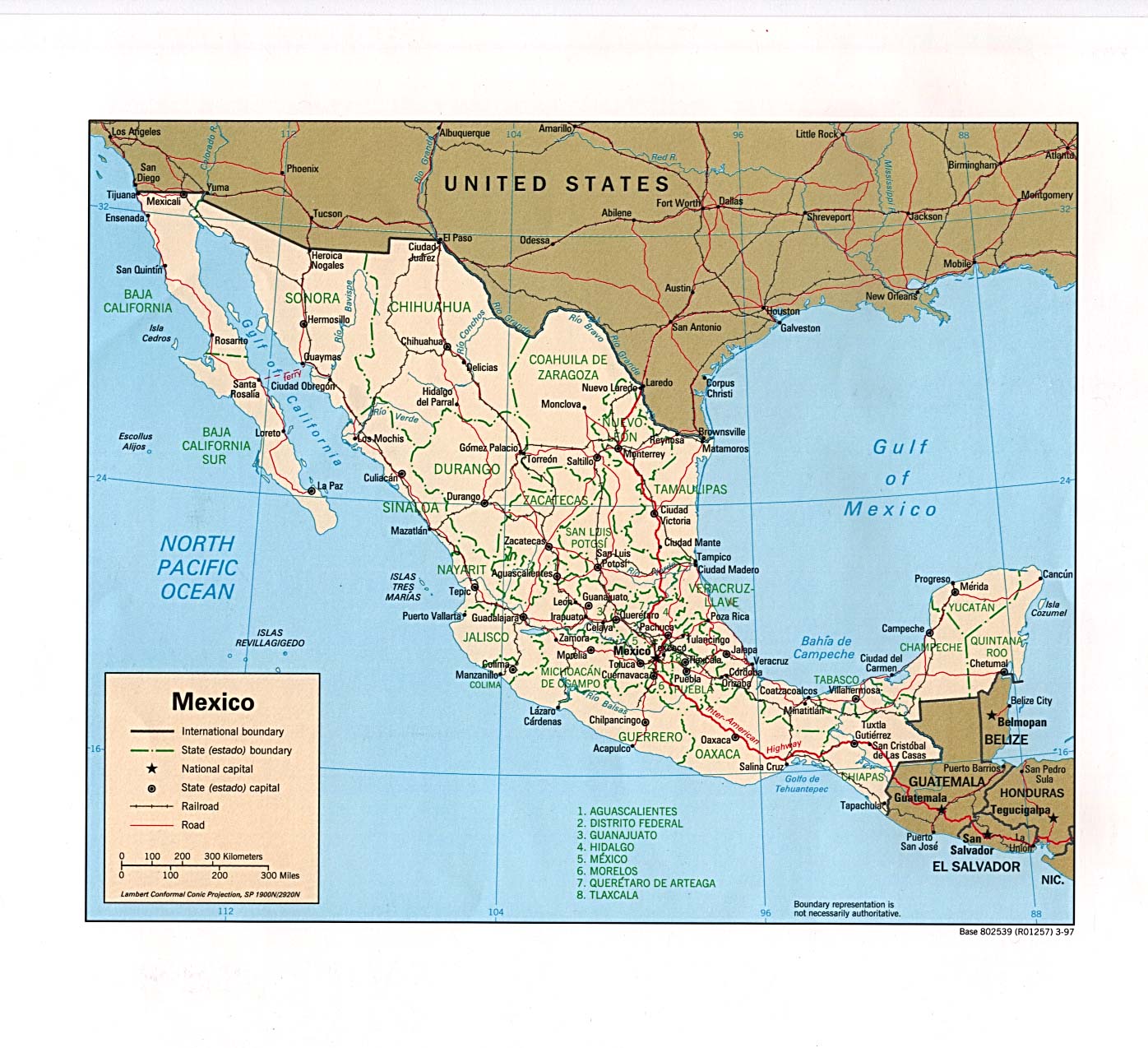
Given the lack of coverage in America's broadcast news, you could be forgiven if you did not notice the escalating drug war in the US's southern neighbor, Mexico. In short, President Felipe Calderón has stepped up efforts to fight drug cartels that have become powerful enough to be considered the de facto leadership in some states and cities -- such as Sinaloa and Juarez, respectively. The organized, wealthy, and well-armed cartels have reacted with intense violence, killing more Mexicans last year than all American soldiers killed in the Iraq and Afghanistan Wars combined. But fortunately -- if murder can ever can be considered "fortunate" -- most of the deaths are gang members, in the process of desperately struggling for territory. (Another good article on the situation.)

This is important for at least two reasons. First, the violence affects the lives of many Mexicans and threatens the society, in general. Second, killing, kidnapping, and increased migration (from desperate civilians in Mexico) is affecting the US.

The circumstance has become this dire for a few reasons -- two of which directly involve the US. First, for too long, these gangs had been left to their own devices or paid off police to leave them be. And continued failure by Mexico's presidents to reform the police has allowed cartels to grow roots in their respective territories. Second, many of the weapons the gangs are currently using to kill thousands come from 6,600 US gun dealers on the Mexican border who frequently sell weapons to middlemen, who then turn around and sell to the gangs. 

Third, and most importantly, the bulk of Mexico's drug trade is still feeding the US black market for marijuana.

Given the contributing factors, the solution must be matching. President Calderón has made reversing the first factor -- competent security and governance -- the centerpiece of his term. 

The second issue, guns, must be dealt with from the US side by much stricter regulation and tracking over gun sales. For example, new laws could require that gun purchasers prove their continued possession periodically -- maybe every few months. 

But as I alluded to before, the third factor is central: the demand for illegal drugs. And the obvious solution -- legalization -- is the reason why the US discussion of Mexico's violence is either insincere or ignored altogether. Take George Will's recent column, for example. He goes on for 90% of the article about the problem of violence spilling over into Arizona, but when it comes to the reality of confronting the problem, he writes one sentence:
Whatever the merits of legalization -- and there are certain to be costs -- it will not happen in the foreseeable future, which is where Arizonans must live.
Shrugging it off sure is easy, huh? 

I am not going to undertake a long argument for legalization here -- and I'd like to hear your opinions on it in the 'comments' section. (Besides, many have done a much more competent job than I could right now.) I will confine myself to the most relevant reason: drug cartels will figure out a way to get their products to the tens of millions of Americans who use them -- and will continue to do so -- as long as there are not legal channels. Put another way, the demand is a constant; the only malleable issue is who is supplying the drugs -- a gang or stores. 

Americans can continue to deny or ignore the reality at America's door. But what happens when it bursts in anyways?

March 22 - Update: for a better idea of the massive and profitable industry of marijuana in the US, read this article. (The article is from Foreign Policy magazine, but the FP website is having problems right now.)

Saturday, March 14, 2009

Barack W. Bush?

Is the foreign policy of President Obama no different from that of George W. Bush? Bob Kagan wrote an article in the Post last week arguing just this.

Kagan, a foreign policy scholar at the Carnegie Endowment, claims that in the most urgent foreign policy challenges facing the US -- North Korea, Iraq, Afghanistan, Iran, democracy and human rights -- the new White House is essentially continuing the trajectory of America's last administration. Kagan says that the only difference is in the rhetoric, where Obama has declared a new type of foreign policy.

But Kagan is wrong for two broad reasons. First, in some ways, Obama policy really has departed from Bush. For example, Obama is undertaking a different strategy in Afghanistan. Where Bush would not negotiate with the Taliban, Obama's team has made it clear that the Taliban are not one monolithic group and should be treated as such -- some militants can be reconciled through negotiation. 

The second reason Kagan is mistaken is that he discounts the change in style as an unimportant. (Of course, as one of the leading realists in the world, Kagan may be irreconcilable on this issue.) True, rhetoric is not the same thing as action. But authority is not only derived from what you do. It is derived, in large part, through consent. Trust matters.

To the rest of the world, Iraq and the "War on Terror" under Bush was tied to America's larger disregard for international law and the interests of people from other countries. Iraq was an illegal war, "Axis of Evil" was an arbitrary justification for aggression, the "War on Terror" became a codified war on Islam, Guantanamo Bay took away the basic rights of hundreds, and torture was kicking dirt on the Geneva Convention. In the eyes of others, the US had become a bellicose, unilateral superpower.

Even though Obama policy, on the ground, has not changed drastically from Bush, Obama's symbolic overtures have made a profound difference in regaining America's moral authority around the world. Let's be honest, Guantanamo Prison now only holds a couple hundred people, so the closing of that prison is not affecting large populations. But the gains in authority around the world are profound. The same can be said for ending the practice of torture and committing to a more cooperative approach in foreign policy. By submitting itself to a more consensual system of international rules, the US regains authority. 

And this authority will matter in significant ways in the future. Two examples: 1) countries are more likely to follow international law if the most powerful countries in the world are doing so. At the very least, it takes away an excuse for not abiding by law -- think Iran or Russia. 2) Fewer individual people may feel compelled to formulate grand, violent plots against Americans as a form of vigilante justice for the law-breaking USA. In other words, rebuilding authority would mitigate one of the contributing factors to terrorism.

In discussing the importance of symbolism and consent with one of my colleagues, I used the example of a book. Imagine you have a favorite book. Scenario one: an acquaintance takes the book from you and, after you fret over where it went for a few days, tells you that they borrowed it. Scenario two: an acquaintance asks you if they can borrow the book before you graciously allow them to do so. In both cases, the exact same thing is happening in regards to the book (it goes into the possession of the acquaintance), thus the prior consent for borrowing the book is symbolic. But in the first scenario, you will surely be more irritated because you did not give consent. The consent is what gives the acquaintance the authority to possess the book.

Without consent, America's actions eroded its authority for most of the past eight years. Would the effect of Iraq War not have been profoundly different if it had been authorized by the United Nations? Obama is not leading a revolution in foreign policy. But if his change in approach leads to a world in which others don't feel threatened by American power, then that is a clear departure from the feelings invoked by Bushian foreign policy.    

Note: my thesis at The Ohio State University was on the subject of US authority in international relations. You can read it here.

Sunday, March 1, 2009

New Taxes on the Wealthy Unfair?

Are higher taxes for the nations top 5% a clear example of governmental overreach? 

Anyone who followed the presidential campaign could see this battle coming for months. President Obama recently announced his budget, which includes plans to expire the tax cut for Americans that make over $250,000 annually. As soon as it was announced, the debate began -- just on time -- about whether or not this is fair. 

In a recent LA Times article, Brian Riedl of the Heritage Foundation, a think tank, said that under Obama's plan, the top 20% of taxpayers in the US will pay 90% of all taxes. I had a hard time finding information that verified this claim. But let's suppose that Riedl's numbers are accurate. Initially, this may sound like a crime. Yet a look at reality would tell you that such a tax burden is actually in line with the distribution of resources in America.

In 2001, the top 20% of the richest in America owned 91% of financial wealth and 84% of net worth. The top 10% also had about 85% of all investments (stocks, bonds, trust funds, etc.) and 71% of net worth. This book (see pp. 28-34) and this study (chapter 5) -- among many others -- find the same results. And all of this was before the Bush tax cuts had a chance to accelerate the rate of inequality.

In reality, then, the new taxes match the reality quite well. On principle, it is simply fair. But there are other concerns.

One complaint is that these taxes are simply meant to redistribute wealth and make everyone economically equal. But this is not even a possibility. Just because the wealthiest pay most of the taxes doesn't mean that it reduces their wealth. To the contrary, the richest Americans' wealth is increasing far faster than taxes can reduce their wealth. According to Congressional Budget Office data, from 1979-2004, the top 1% saw their annual income rise 176%. The top fifth gained a 69% rise in their income.  The middle 3/5 saw a 20-30% increase, and the poorest 20% saw only a 6% increase in their income. Compared to the median income increase over the same time period (about 10%), the poorest fifth in the country are actually more poor than 30 years ago! (And the top 1% made out like gangbusters.) 

So the wealthiest in America have nothing to worry about if they think that they'll be taxed out of prosperity. Their huge income advantage and almost total ownership of investments will prevent higher taxes from regressing their wealth.

Another complaint goes something like this: rich people work harder for their wealth and should not have to give any more of it back to society. This is essentially saying that 20% of people in the United States work four times harder than the other 80%. Please! I won't even dignify that with a response.

Then there is the pragmatic side of this whole issue. The bottom 80% of American wealth-owners, and especially the bottom 60%, are struggling. The bottom 90% of wealth-owners have 74% of the nation's debt. True, some blame can be relegated to irresponsbility of borrowers and lenders -- living beyond means and trying to make money off of predatory lending. But many people are in debt simply because they have to be. Very few Americans can attend a university, own a home (no matter what size), or start a business without significant debt.   

And these debts were already a problem before the recession. Now they are breaking people's back. 

The point here: the government needs revenue to provide the services, projects, and credits (for school, homes, and businesses) that the far majority of Americans require. That money must come from somewhere (other than borrowing abroad). Some of it will come from cuts in ineffective programs; some of it will come from taxing the wealthy. It's dollars and sense (pun intended). 

Therefore, these tax measures are both principled and pragmatic. The wealthiest are going to be just fine.